
XGAMBET • IGAMING PLATFORM COMPONENT GUIDE
ระบบเว็บพนันครบวงจรควรมีองค์ประกอบอะไรบ้าง
ระบบเว็บพนันหนึ่งระบบไม่ได้มีเพียงเว็บไซต์, Backoffice หรือ Game API เพียงส่วนเดียว แต่ประกอบด้วยหลาย Component ที่รับผิดชอบ Account, Session, Wallet, Product, Payment, Game Integration, Operation, Customer Data, Reporting และ Infrastructure คนละหน้าที่กัน
การประเมิน Platform จึงไม่ควรถามเพียงว่า “มี Feature อะไรบ้าง” แต่ควรเห็นให้ชัดว่าแต่ละระบบทำหน้าที่อะไร, System of Record อยู่ที่ใด, ข้อมูลและ Transaction ไหลข้ามระบบอย่างไร และเมื่อ Component หนึ่งเกิดปัญหา ส่วนใดของ End-to-End Workflow จะได้รับผลกระทบ
ON THIS PAGEสารบัญ
อย่ามอง “ระบบเว็บพนัน” เป็นระบบก้อนเดียว
สิ่งที่ผู้ใช้งานเห็นด้านหน้าอาจเป็นเว็บไซต์เดียว มีหน้า Register, Login, Lobby, Deposit, Withdrawal และ Account อยู่ใน Interface เดียวกัน แต่สิ่งที่เกิดขึ้นด้านหลัง สามารถกระจายอยู่ในหลายระบบที่รับผิดชอบคนละเรื่อง ตั้งแต่ Identity, Account, Session, Wallet, Product, Payment, Game Provider, Backoffice, CRM ไปจนถึง Reporting และ Monitoring
ในมุมของการวางระบบ สิ่งสำคัญจึงไม่ใช่เพียงการมี Module ครบตามชื่อ แต่ต้องตอบให้ได้ว่า ใครเป็นเจ้าของข้อมูลอะไร, Component ใดเรียก Component ใด และสถานะสุดท้ายถูกยืนยันที่ระบบใด เพราะ Module ที่ทำงานได้แยกกัน ไม่ได้หมายความว่า End-to-End Flow จะทำงานร่วมกันได้ถูกต้องเสมอ
Frontend คือ Interface ที่ผู้ใช้เห็น ส่วน Platform เป็นระบบเบื้องหลัง ที่จัดการ Context และ Workflow หลัก
Platform เป็น Core System ขณะที่ Backoffice เป็น Operator Control Layer สำหรับทีมงาน
Payment ติดต่อระบบการเงินภายนอก ส่วน Wallet ดูแล Balance และ Financial State ภายใน Platform
Provider ให้ Game Content ส่วน Aggregator สามารถทำหน้าที่เป็น Integration Hub เชื่อมหลาย Provider
CRM/CDP จัด Customer Context ขณะที่ Automation นำ Event และ Rule ไปสร้าง Action
Dashboard อาจรวมข้อมูลเพื่อแสดงผล แต่ข้อมูลต้นทางจริงอาจอยู่ในระบบอื่น
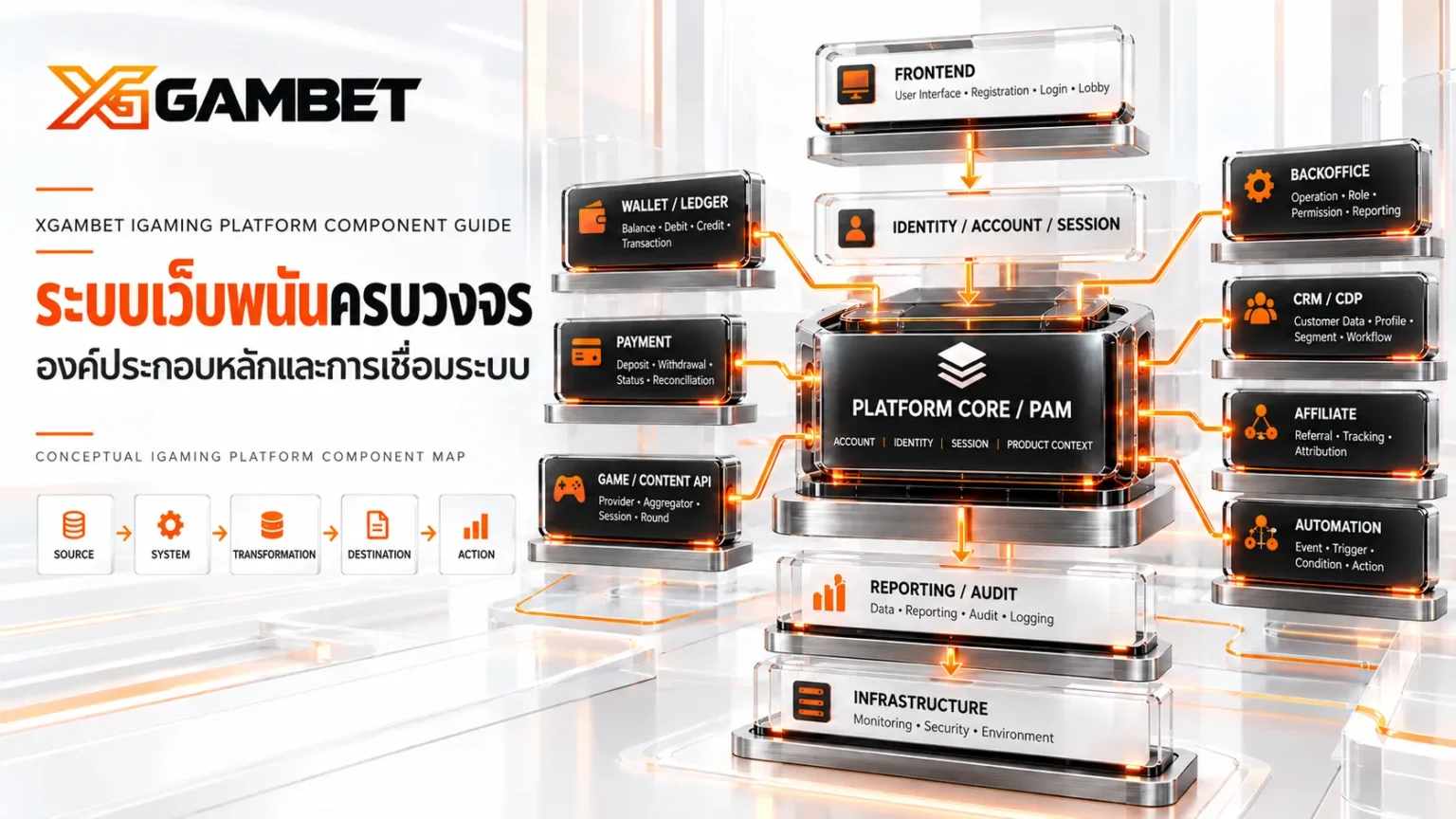
ภาพรวม System Map ของ iGaming Platform
แผนผังนี้เป็น Conceptual Industry Model สำหรับอธิบาย Responsibility และ Dependency ของ Component ไม่ใช่ Internal Architecture จริงของ XGAMBET และ Implementation จริงสามารถแตกต่างกัน ตาม Vendor, Product และ Business Model
หน้า ระบบเว็บพนัน XGAMBET เป็น Owner Page สำหรับอธิบาย Platform ในระดับ Product/System ส่วนบทความนี้ใช้สำหรับแตก Platform ออกเป็น Component และ Dependency
Frontend / User Interface
Frontend เป็น Layer ที่ User ใช้โต้ตอบกับระบบโดยตรง เช่น Registration, Login, Lobby, Product Navigation, Deposit/Withdrawal UI, Account, Promotion และช่องทาง Support
Responsibility หลักของ Frontend คือรับ Input, แสดงผล และเรียก Platform หรือ API เพื่อดำเนินการตาม Workflow แต่ Frontend ไม่ควรถูกมองว่าเป็น Financial Source of Truth เพราะยอดเงินหรือสถานะ Transaction ควรถูกยืนยันจากระบบที่รับผิดชอบข้อมูลนั้นจริง
- Responsive และ Mobile Experience
- Language และ Localization
- Error State และ Empty State
- Session Expiry
- Payment Status
- Game Launch State
- Account Update Flow
Identity / Account Management / PAM
Account หรือ Player Account Management เป็นแกนสำหรับ Operational Identity ของผู้ใช้งาน เช่น Authentication, Account Status, Access, Profile Context และสิทธิ์ในการเข้า Product
ใน Platform Architecture Account Context มักถูกใช้อ้างอิงต่อ โดย Wallet, Session, Product, Payment, Game Integration และ Backoffice จึงต้องกำหนด Identifier และ Ownership ให้ชัดตั้งแต่ต้น
Operational Identity
ใช้ระบุตัวตน, Access, Account Status และ Context ที่ระบบต้องใช้ระหว่างการทำงาน
Customer Context
ใช้กับ Customer Data, Segmentation, Lifecycle และ Customer Workflow
Session Layer
Session ใช้ผูก User กับ Interaction ที่ได้รับการยืนยันแล้ว เช่น Login Session, Product Context หรือ Security Context ระหว่างที่ผู้ใช้กำลังใช้งานระบบ
Login Session, Game Provider Session และ Payment Session สามารถเป็นคนละ Context และมี Lifecycle ต่างกัน
Wallet / Ledger
Wallet เป็น Component สำคัญ สำหรับเก็บ Balance, Debit, Credit, Transaction และ Financial State ภายใน Platform
สิ่งสำคัญคือแยก Wallet ออกจาก Payment ให้ชัด เพราะ Payment ทำหน้าที่เชื่อมการเคลื่อนเงิน กับ External Provider ขณะที่ Wallet ใช้บันทึกสถานะทางการเงิน ภายในระบบ
ระบบใดถือ Balance ที่เชื่อถือได้
ระบุธุรกรรมข้ามระบบอย่างไร
ป้องกัน Request ซ้ำอย่างไร
เมื่อ Transaction ต้องย้อนกลับทำอย่างไร
ตรวจความตรงกันของข้อมูลอย่างไร
ตรวจย้อนหลังได้ถึงระดับใด
Product Layer
Product Layer คือ Domain ที่ให้บริการ Product เฉพาะประเภท เช่น Casino, Slot, Live Casino, Lottery หรือ Sportsbook
Product ไม่ควรถูกมองว่าเป็น Platform Core เพราะ Core Platform อาจรับผิดชอบ Account, Wallet และ Context กลาง ขณะที่แต่ละ Product มี Domain Logic และ Workflow ของตนเอง
Game / Content Integration
การเชื่อม Game Content สามารถเป็น Direct Provider หรือผ่าน Aggregator ซึ่งทำหน้าที่เชื่อม Operator Platform กับ Remote Game Systems จากหลาย Provider
Integration ในระดับนี้ อาจเกี่ยวข้องกับ Game Catalogue, Launch, Session, Wallet, Bet/Win, Round, Provider Status และ Reporting แต่รายละเอียด Endpoint และ Transaction Protocol ควรตรวจจาก Technical Specification ของ Integration ที่ใช้งานจริง
Payment Layer
Payment Layer ทำหน้าที่เชื่อม Platform กับ PSP, Gateway, Banking/Payment Rails หรือระบบรับจ่ายเงินภายนอก ตาม Architecture ที่เลือกใช้
Workflow อาจเกี่ยวข้องกับ Deposit, Withdrawal, Status, Webhook, Matching, Reconciliation และการจัดการ Failed/Pending Transaction
ต้องกำหนด State Handling และ Reconciliation สำหรับกรณีที่สถานะระหว่าง Payment Provider กับ Platform ไม่ตรงกัน
Backoffice
Backoffice คือ Operator Control Layer ที่ทีม Operation ใช้เข้าถึง ตรวจสอบ และจัดการข้อมูล หรือ Function ที่ Platform เปิดให้ใช้งาน
หน้าที่อาจครอบคลุม Account, Transaction, Role, Permission, Reporting, Adjustment, Provider Status, Configuration และ Manual Review ตาม Scope ของระบบ
Role / Permission
Role และ Permission กำหนดว่า User หลังบ้านคนใด สามารถเห็นข้อมูลอะไร, ทำ Action อะไร และอนุมัติ Action ประเภทใดได้
| Role | View | Action | Approval |
|---|---|---|---|
| Admin | System | Manage | ตาม Scope |
| Finance | Transaction | Review | Financial |
| Support | Account | Support | Limited |
| CRM | Customer Context | Workflow | ตาม Scope |
Automation
Automation นำ Event หรือข้อมูลจากระบบ ไปตรวจ Trigger และ Condition ก่อนดำเนิน Action แล้วเก็บ Log หรือ Result เพื่อให้ Workflow สามารถตรวจสอบได้
Human Control
คนใช้ Interface เพื่อตรวจสอบและทำ Action
Rule-based Workflow
System ดำเนิน Workflow ตาม Event และ Rule ที่กำหนด
CRM / CDP
CDP ใช้รวบรวมและจัด Customer Data เพื่อสร้าง Customer Context หรือ Profile ขณะที่ CRM ใช้ข้อมูลเหล่านั้น กับ Relationship และ Workflow ตาม Business Process
Affiliate
Affiliate Layer ใช้รองรับ Partner หรือ Acquisition Workflow เช่น Referral, Tracking, Attribution, Conversion, Commission และ Reporting ตาม Commercial Model ของระบบ
Affiliate ไม่ควรถูกสับสนกับ CRM เพราะ Affiliate เน้น Partner และ Attribution ขณะที่ CRM/CDP เน้น Customer Relationship และ Data Workflow
Reporting, Analytics, Audit และ Logging
Reporting ใช้เพื่อสร้างมุมมอง Business, Financial, Transaction, Product และ Operation เพื่อให้ทีมสามารถวิเคราะห์ หรือ Investigate เหตุการณ์ที่เกิดขึ้น
อย่างไรก็ตาม Dashboard อาจเป็นเพียง Aggregate View ขณะที่ Source of Truth อาจอยู่ใน Wallet, Transaction Service, Game Provider หรือ Payment System จึงควรระบุ Data Ownership แยกจาก Reporting Layer
Business Accountability
ใครทำอะไร, ทำเมื่อไร และข้อมูลก่อน/หลัง Action เป็นอย่างไร
Technical Event Detail
Request, Error, System Event และ Integration Trace
Compliance / Risk Layer
Requirement ด้าน Compliance และ Risk ไม่ควรกำหนดเหมือนกันทุก Project เพราะขึ้นอยู่กับ Jurisdiction, Licence, Business Model และ Product ที่ดำเนินการ
ในบางบริบทอาจเกี่ยวข้องกับ KYC, AML, Responsible Gaming, Limits, Self-exclusion, Regulatory Reporting หรือ Fraud/Risk Controls แต่ขอบเขตที่ต้องใช้จริง ควรตรวจตามตลาดเป้าหมายของโครงการ
Infrastructure, Monitoring และ Observability
Infrastructure ไม่ได้หมายถึง Server เพียงอย่างเดียว แต่เป็น Foundation ที่รองรับระบบทั้งหมด เช่น Compute, Database, Cache, Network, CDN, Storage, Backup, Environment, Monitoring และ Logging
Monitoring และ Observability ช่วยให้ Technical/Operation Team เห็นสถานะระบบ, Error, Integration Status, Payment Incident, Provider Incident และ Transaction Failure ที่ต้องตรวจสอบ
Current System Health
ระบบกำลังทำงานอย่างไรในขณะนี้
Business / Operation Data
ข้อมูลที่เกิดขึ้นแล้ว และนำมาวิเคราะห์ในมุมธุรกิจ
API / Integration Layer
Integration Layer เป็นจุดเชื่อมระหว่าง Frontend, Payment, Game, CRM, Affiliate, KYC, Analytics และ External Services ที่โครงการต้องใช้
การประเมินจึงควรมองมากกว่า “มี API หรือไม่” แต่ต้องตรวจ Authentication, Versioning, Documentation, Error Handling, Retry, Rate Limit, Webhook, Deprecation และ Monitoring ตามความสำคัญของ Integration นั้น
ระบบครบวงจรไม่จำเป็นต้องมาจาก Vendor เดียว
Platform สามารถถูกวางเป็น Full-stack ที่หลาย Module อยู่ใน Ecosystem เดียวกัน หรือเป็น Modular Stack ที่เลือกใช้ระบบจากหลาย Provider แล้วเชื่อมกันผ่าน Integration Layer
Unified Ecosystem
- จำนวน Integration ระหว่าง Vendor อาจน้อยลง
- Operation สามารถรวมอยู่ใน Environment เดียวได้มากขึ้น
- ต้องประเมินความเหมาะสมของ Module ทั้งชุด
Component Choice
- เลือก Specialist Vendor ราย Component ได้
- วาง Replaceability ของระบบได้ง่ายขึ้นในบาง Architecture
- ต้องจัดการ Integration และ Ownership เพิ่มขึ้น
ไม่มี Model ใดเป็น Winner สำหรับทุก Project ทางเลือกขึ้นอยู่กับ Requirement, Integration Complexity, Operation, Data Ownership และ Commercial Model
ระบบใดถือเป็น Core และระบบใดขึ้นอยู่กับ Business Model
ไม่ควรสรุปว่าทุก Project ต้องมีทุก Module เหมือนกัน เพราะ Slot-only Project และ Multi-product Operator สามารถมี Requirement ต่างกันมาก
มักต้องกำหนดให้ชัดตั้งแต่ต้น
- Account
- Wallet
- Product
- Payment
- Backoffice
- Reporting
ขึ้นอยู่กับ Requirement
- CRM / CDP
- Affiliate
- Automation
- KYC Vendor
- Data Warehouse
- Custom Analytics
ระบบแต่ละส่วนเชื่อมกันอย่างไร
ตัวอย่างนี้ใช้เพื่อมอง Dependency ของ Workflow ตั้งแต่ User เริ่มสร้าง Account ไปจนถึงข้อมูลถูกนำไปใช้ใน Operation และ Reporting
จุดเชื่อมที่ต้องตรวจมากกว่าการดูว่า “มี Module หรือไม่”
Identifier และ Account Context ต้องสัมพันธ์กันอย่างไร
Payment Status ถูกแปลงเป็น Wallet State อย่างไร
Bet/Win และ Round ถูกบันทึกและ Reconcile อย่างไร
Operator มองเห็นหรือทำ Action กับข้อมูลระดับใด
Customer Event ถูกส่งไปสร้าง Profile หรือ Workflow อย่างไร
Referral และ Attribution ถูกผูกกับ Account อย่างไร
Report ใช้ข้อมูลจาก Source ใด และ Update เมื่อไร
Source of Truth ต้องกำหนดให้ชัด
เมื่อข้อมูลเดียวกันปรากฏอยู่หลายระบบ ต้องรู้ว่าระบบใดเป็นต้นทาง ที่ใช้ยืนยันสถานะสุดท้าย ไม่เช่นนั้นทีม Operation จะพบปัญหาเมื่อ Dashboard, Provider และ Transaction Record แสดงสถานะไม่ตรงกัน
ตัวอย่างข้างต้นเป็น Conceptual Model และ Final Ownership ต้องอิง Implementation จริงของแต่ละโครงการ
Data Flow ควรถูกวาดก่อนตัดสินใจเลือกระบบ
ตัวอย่าง Game Bet Flow
Worksheet สำหรับทำ Inventory ก่อนเลือก Platform
ตารางนี้ใช้เป็น Working Document เพื่อระบุว่าแต่ละ Component มี Purpose อะไร, จำเป็นตั้งแต่ Launch หรือไม่, ใครเป็น Owner และต้องเชื่อมกับระบบใด
| Component | Purpose | Priority | Internal / Third-party | Owner | Integration |
|---|---|---|---|---|---|
| PAM | Account | Core | กำหนดตาม Project | — | Wallet / Product |
| Wallet | Balance / Transaction | Core | กำหนดตาม Project | — | Payment / Game |
| Backoffice | Operations | Core | กำหนดตาม Project | — | Platform / Data |
| Payment | Deposit / Withdrawal | Core | มักมี External Integration | — | Wallet |
| Game API | Game Content | Depends | Provider / Aggregator | — | Wallet / Account |
| CRM | Customer Lifecycle | Depends | กำหนดตาม Project | — | Account / Events |
| Affiliate | Partner Tracking | Depends | กำหนดตาม Project | — | Account / Reporting |
Component หนึ่งสามารถพึ่งหลายระบบพร้อมกัน
ตัวอย่างเช่น Game Product ไม่ได้ทำงานด้วย Game Provider อย่างเดียว แต่ End-to-End Experience สามารถต้องพึ่ง Account, Session, Wallet, Provider Integration, Backoffice และ Reporting
ถ้าตัด Component ออก จะเกิดอะไรกับ Operation
ทีม Operation อาจตรวจ Account หรือ Transaction ได้ยากขึ้น
การหาว่าใครทำ Action อะไร และเมื่อไรจะทำได้ยาก
สถานะของ Transaction ระหว่างหลายระบบอาจไม่ตรงกัน
สิทธิ์ที่กว้างเกินความจำเป็น เพิ่ม Operational และ Security Risk
อย่าถามเพียงว่า “มีหรือไม่มี”
ถามว่า “CRM ใช้ Data จากไหน และส่ง Action กลับไปยังระบบใด?”
ถามว่า “Payment Status เชื่อมกับ Wallet และ Reconciliation อย่างไร?”
ถามว่า “Game Transaction และ Round Reconcile กับ Wallet อย่างไร?”
Checklist ประเมินองค์ประกอบระบบเว็บพนัน
7 คำถามที่ Operator ควรถามก่อนเลือกระบบ
- System of Record ของ Account, Balance และ Transaction อยู่ที่ไหน?
- Wallet เชื่อม Payment และ Game Transaction อย่างไร?
- Module ใดเป็น Built-in และ Module ใดเป็น Third-party?
- เมื่อ Component หนึ่ง Failure ระบบใดได้รับผลกระทบบ้าง?
- Data สามารถ Export หรือส่งต่อไปยังระบบอื่นอย่างไร?
- มีวิธี Reconcile ข้อมูลระหว่าง Provider กับ Platform อย่างไร?
- หากต้อง Replace Module ในอนาคต Dependency ใดต้องเปลี่ยนตาม?
Platform อาจรองรับ Connector หรือ Integration กับ Third-party แต่ไม่ได้หมายความว่า Contract, Service Fee หรือค่าบริการของ Third-party รวมอยู่ใน Platform Commercial Model เสมอ จึงต้องตรวจ Scope และ Commercial Term แยกกัน
คำถามเกี่ยวกับองค์ประกอบระบบเว็บพนัน
ระบบเว็บพนันมีองค์ประกอบอะไรบ้าง?
โดยทั่วไปสามารถประกอบด้วย Frontend, Account/PAM, Session, Wallet, Product, Payment, Game/Content Integration, Backoffice, Role/Permission, Reporting, Audit, API/Integration และ Infrastructure ขณะที่ CRM, Affiliate, Automation หรือ Component อื่น ขึ้นอยู่กับ Business Model และ Requirement ของแต่ละโครงการ
Platform กับ Backoffice ต่างกันอย่างไร?
Platform เป็น Core System ที่รองรับ Account, Wallet Context, Product และ Integration ส่วน Backoffice เป็น Operator-facing Layer ที่ทีมงานใช้ตรวจสอบ และควบคุม Function ที่ Platform เปิดให้ใช้งาน
Wallet กับ Payment ต่างกันอย่างไร?
Wallet ใช้ดูแล Balance, Debit, Credit และ Financial State ภายใน Platform ขณะที่ Payment Layer ใช้เชื่อม Deposit/Withdrawal กับ Payment Provider หรือ Financial System ภายนอก
Game Aggregator เป็นส่วนเดียวกับ Platform หรือไม่?
ไม่จำเป็น Aggregator สามารถทำหน้าที่เป็น Integration Hub ระหว่าง Operator Platform กับหลาย Game Provider ขณะที่ Platform Core ยังมี Responsibility อื่น เช่น Account, Wallet และ Operational Context
CRM จำเป็นกับทุก Project หรือไม่?
ไม่จำเป็นทุกกรณี ความจำเป็นของ CRM/CDP ขึ้นอยู่กับ Customer Data, Lifecycle และ Workflow ที่ Business Model ต้องใช้
ระบบครบวงจรต้องใช้ Vendor เดียวหรือไม่?
ไม่จำเป็น Platform สามารถเป็น Full-stack จาก Ecosystem เดียว หรือเป็น Modular Stack ที่เชื่อม Specialist Vendor หลายรายผ่าน Integration Layer ได้
Reporting กับ Source of Truth ต่างกันอย่างไร?
Reporting สามารถเป็น Aggregate View ที่นำข้อมูลจากหลาย Source มาแสดงผล ขณะที่ Source of Truth คือระบบต้นทางที่ใช้ยืนยัน สถานะของข้อมูลนั้นจริง
ระบบใดถือเป็น Core?
Account, Wallet, Product, Payment, Backoffice และ Reporting เป็นกลุ่มที่ควรกำหนด Responsibility ให้ชัดตั้งแต่ต้น แต่ Requirement จริงยังขึ้นอยู่กับ Product และ Business Model ของแต่ละ Project
ก่อนเลือก Platform ควรวาด Architecture หรือไม่?
ควรมีอย่างน้อย Component Map, Data Flow, Ownership และ Dependency Map เพื่อให้เห็นว่า Account, Money State, External System และ Data Flow อยู่ตรงไหน ก่อนเปรียบเทียบ Platform ตาม Requirement จริง
เริ่มจาก Component Inventory ก่อนเปรียบเทียบ Platform
ก่อนเลือก Platform ควรกำหนดให้ชัดว่า Core System ของ Project อยู่ที่ไหน, Module ใดต้องใช้ตั้งแต่ Launch, ส่วนใดใช้ Third-party และ Data/Transaction ไหลระหว่างระบบอย่างไร จากนั้นจึงเปรียบเทียบ Platform ตาม Requirement และ Workflow จริง แทนการตัดสินจากจำนวน Feature เพียงอย่างเดียว