
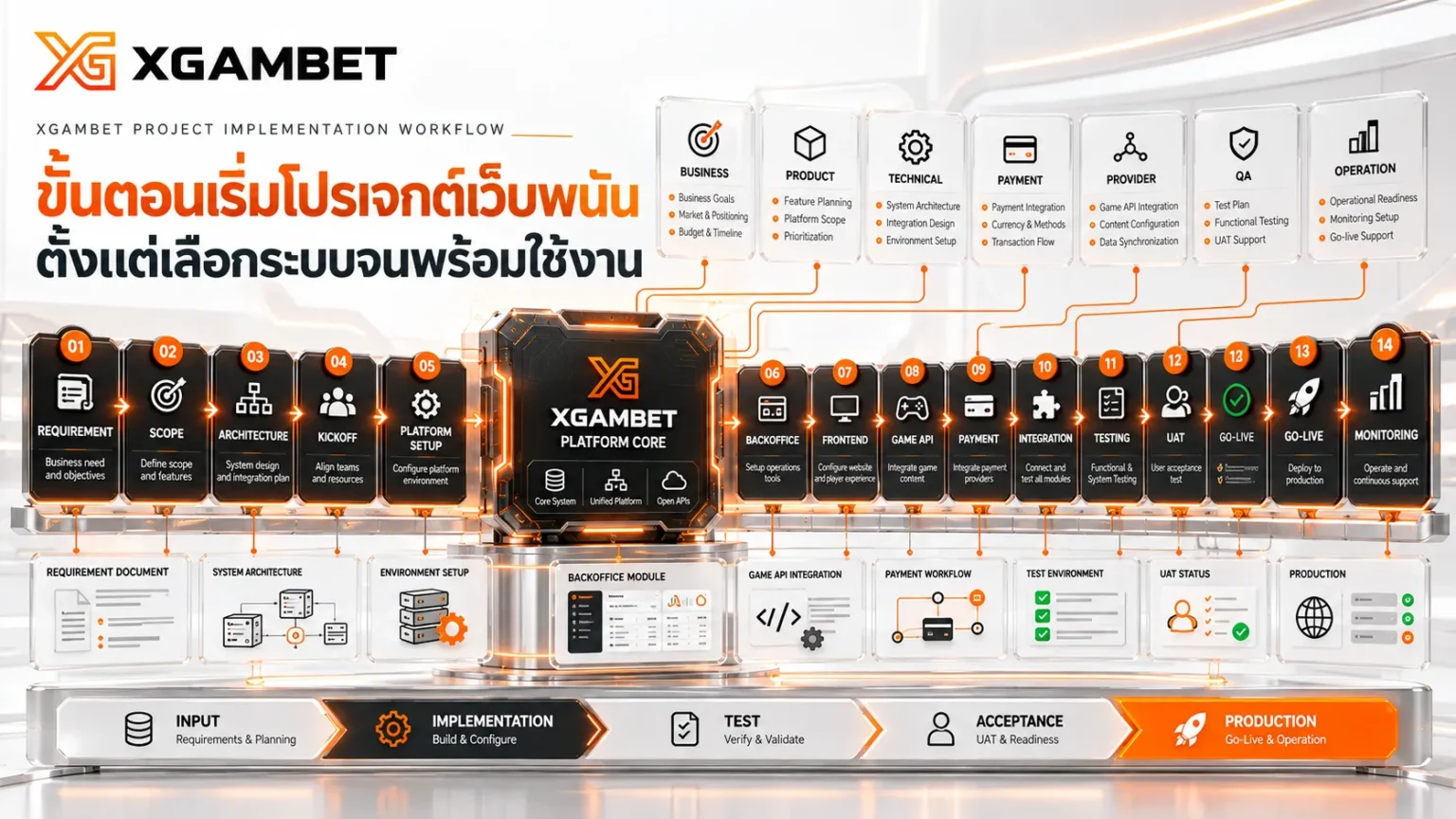
ขั้นตอนเปิดเว็บพนัน ตั้งแต่เลือกระบบจนพร้อมใช้งานมีอะไรบ้าง
หลังจากกำหนด Business Requirement และเลือกรูปแบบระบบแล้ว Project iGaming ยังต้องผ่านการออกแบบ Scope, Architecture, Configuration, Integration, Testing, Operational Readiness และ Go-live อีกหลายจุดก่อนจะถือว่าระบบพร้อมใช้งานจริง
สิ่งสำคัญคือแต่ละ Stage ไม่ได้ทำงานแยกจากกัน งานจาก Business, Product, Technical, Payment, Provider, QA และ Operation ต้องมี Output ที่ส่งต่อถึง Stage ถัดไปอย่างชัดเจน เพื่อไม่ให้ Dependency หรือ Requirement ที่ยังไม่พร้อม กลายเป็นปัญหาในช่วง Integration และ Testing
ON THIS PAGEสารบัญ
Project ไม่ได้เริ่มจากการติดตั้งระบบทันที
ก่อน Config Platform หรือเริ่ม Integration Project ต้องมี Business Requirement, System Requirement, Responsibility และ Scope ที่ชัดพอให้ทุกทีมใช้ข้อมูลชุดเดียวกัน
Flow ในบทความนี้เป็นกรอบการทำงานเชิงอุตสาหกรรมสำหรับอธิบาย การเดิน Project iGaming โดยทั่วไป ไม่ใช่การยืนยันว่าเป็น Internal Implementation Process ของ XGAMBET ทุก Project เพราะรายละเอียดจริงขึ้นกับ Scope, Provider, Integration และรูปแบบการดำเนินงานของแต่ละโครงการ
หากข้ามช่วง Requirement และ Scope ไปเร็วเกินไป ปัญหามักไม่ได้หายไป แต่จะถูกเลื่อนไปปรากฏในช่วง Integration, UAT หรือก่อน Go-live ซึ่งเป็นช่วงที่การแก้ไข อาจกระทบระบบและหลายทีมพร้อมกัน
ภาพรวม Workflow จาก Requirement ถึง Post-launch
Project สามารถมองเป็น Chain ของ Stage ที่มี Dependency และ Handoff ต่อเนื่องกัน
Requirement Discovery — เปลี่ยน Business Need ให้เป็น Requirement
Stage แรกไม่ใช่การเลือก Feature แต่คือการแปลงความต้องการทางธุรกิจ ให้กลายเป็น Requirement ที่ Product และ Technical Team สามารถนำไปออกแบบระบบต่อได้
Business Input
- Target Market
- Products
- User Journey
- Operation
- Timeline Constraint
System Input
- Backoffice Roles
- Payment
- Providers
- CRM
- Affiliate
- Automation
- Reporting
Existing Context
- Existing Systems
- Third-party APIs
- Migration
- Data
- Current Workflow
Output ของ Requirement Discovery
ตัวอย่างการแปลง Requirement เป็น Workflow
สมมติ Requirement ระบุว่า “Finance ต้องสามารถตรวจ Withdrawal ที่ Pending ได้” ทีมไม่ควรหยุดอยู่แค่ประโยคนี้ แต่ต้องแตกให้เห็น Transaction Flow และ Responsibility ของแต่ละระบบ
Scope Definition — กำหนดว่าอะไรอยู่และไม่อยู่ใน Project
หลัง Requirement เริ่มนิ่ง ต้องเปลี่ยนรายการความต้องการ ให้เป็นขอบเขตโครงการที่สามารถอ้างอิงร่วมกันได้
แต่ละ Component ควรถูกระบุสถานะให้ชัดว่าเป็น Included, Optional, Third-party, Custom หรือ Future Phase เพราะสิ่งที่เห็นใน Demo ไม่ได้หมายความว่า Feature นั้น อยู่ใน Scope ของ Proposal โดยอัตโนมัติ
เมื่อ Requirement และ Scope ชัดแล้ว จึงเหมาะที่จะนำข้อมูลชุดนี้ไปประเมินกับ บริการรับเปิดเว็บพนัน XGAMBET หรือผู้ให้บริการรายอื่นโดยใช้ Scope เดียวกัน
Architecture / Solution Design — แปลง Scope เป็นภาพระบบ
Solution Design ทำหน้าที่เปลี่ยนรายการ Module ให้เห็นว่าระบบใดเป็น Core ระบบใดเป็น External และ Data หรือ Transaction ไหลผ่านจุดใดบ้าง
คำถามที่ Architecture ต้องตอบได้
- ระบบใดเป็น Core
- ระบบใดเป็น External หรือ Third-party
- Data ไหลจากระบบใดไปยังระบบใด
- Wallet อยู่ใน Layer ใด
- Authentication อยู่ที่ใด
- Transaction Source of Truth คือระบบใด
- Reporting อ่านข้อมูลจากจุดใด
สำหรับภาพรวมโครงสร้าง Core สามารถอ่าน ระบบเว็บพนัน XGAMBET เพิ่มเติมเพื่อใช้ประกอบการกำหนด Architecture Requirement
Responsibility Mapping — ก่อน Implementation ต้องรู้ว่าใครทำอะไร
Dependency จำนวนมากไม่ได้เกิดจากระบบเพียงอย่างเดียว แต่เกิดจากงานที่หลายฝ่ายคิดว่าอีกฝ่ายเป็นผู้รับผิดชอบ
| Workstream | Operator | Platform Provider | Third Party |
|---|---|---|---|
| Business Requirement | Lead | Support | — |
| Platform Configuration | Input | Lead | — |
| Payment Account | Lead | Integration | PSP |
| Game Commercial Agreement | Depends | Integration | Provider |
| Frontend | Depends | Depends | Agency หากมี |
| QA | Joint | Joint | Support |
| Go-live | Joint | Joint | Joint เมื่อเกี่ยวข้อง |
ตารางนี้เป็น Planning Example เท่านั้น Responsibility จริง ต้องยืนยันจาก Scope และ Commercial Agreement ของแต่ละ Project
PSP Onboarding, Domain, Provider Agreement, Content, Translation, Compliance Document และ Test Account เป็นตัวอย่างของงานที่ควรกำหนด Owner ก่อนเริ่ม Implementation
Commercial Alignment และ Project Kickoff
Technical Scope ต้องสัมพันธ์กับ Proposal, Package, Customisation, Third-party และ Responsibility ก่อนเริ่มงานจริง
Commercial Alignment
- Scope ใน Proposal ตรงกับ Technical Scope
- Package ครอบคลุม Component ใด
- อะไรเป็น Customisation
- อะไรพึ่ง Third-party
- Support ครอบคลุมส่วนใด
- Timeline ใช้ Assumption อะไร
Kickoff Confirmation
- Scope
- Owners
- Timeline
- Dependencies
- Integration List
- Environment
- Communication
- Acceptance Process
- Risk List
หากต้องการดูรูปแบบข้อเสนอและขอบเขตค่าใช้จ่าย สามารถใช้ แพ็กเกจ XGAMBET และการประเมินขอบเขตและค่าใช้จ่าย เป็นข้อมูลประกอบหลัง Scope ถูกกำหนดแล้ว
Dependency Map สำคัญอย่างไร
Task ใน Project ไม่ได้เป็นอิสระต่อกัน ตัวอย่าง Payment Testing ต้องรอหลาย Dependency ก่อนจะเริ่มทดสอบ Transaction ได้
Environment และ Platform Setup
เมื่อ Scope, Architecture และ Owner พร้อมแล้ว จึงเข้าสู่ช่วงเตรียม Environment และ Platform Configuration ตามโครงสร้างของ Project
Project ไม่จำเป็นต้องมี Environment ทุกแบบเหมือนกัน แต่ทีมต้องทราบว่าแต่ละ Environment ใช้ทำอะไร และ Configuration ใดสามารถ Promote ไป Stage ถัดไปได้
ใช้ Capability ที่มีอยู่แล้วและปรับค่าตาม Requirement
สร้างหรือแก้ Functionality ที่ไม่มีใน Standard Scope
เชื่อม Platform กับระบบหรือ Service ภายนอก
สามประเภทนี้ควรถูกแยกใน Project Plan เพราะ Dependency, Testing และความเสี่ยงไม่เหมือนกัน
Backoffice Configuration — แปลง Operation เป็น Role และ Workflow
Business และ Product Team ต้องส่ง Operational Requirement ให้ Technical Team ในรูปที่นำไป Configure ได้
Handoff ที่ Backoffice ต้องได้รับ
รายละเอียดองค์ประกอบของ ระบบหลังบ้านเว็บพนัน สามารถใช้ประกอบการเขียน Requirement สำหรับ Stage นี้ได้
Frontend และ Branding ต้องเดินพร้อม Platform Workflow
Frontend ไม่ควรถูกพัฒนาเป็น Layer แยกจากระบบหลังบ้าน เพราะ Action ที่ผู้ใช้เห็นต้องสัมพันธ์กับ Transaction และ Business Rule ที่ Platform รองรับ
ปุ่ม “Withdraw” บน Frontend ไม่ใช่เพียง UI Component แต่ต้องสัมพันธ์กับ Validation, Wallet, Transaction, Payment Provider, Review และ Final Status ที่ถูกกำหนดในระบบด้านหลัง
Game และ Content Integration
สำหรับ Project ที่มี Slot หรือ Casino การเชื่อม Content ต้องผ่านทั้ง Commercial, Technical และ Testing Dependency
Stage นี้ควรตรวจทั้งการเปิด Game, Session, Wallet Interaction, Round Data, Error Handling และสิ่งที่ Operation ใช้ตรวจสอบย้อนหลัง
อ่านรายละเอียดด้าน Game API และการเชื่อม Game Provider เพิ่มเติมได้เมื่อกำหนด Integration Scope
Payment Integration ไม่ใช่เพียงการใส่ Gateway
Payment ต้องเชื่อม Provider, Transaction State, Matching, Wallet และ Backoffice ให้ทำงานเป็น Flow เดียวกัน
Payment Test Cases
สำหรับรายละเอียดด้าน Flow สามารถดู ระบบฝากถอนอัตโนมัติ เพิ่มเติมได้
Other Integrations — จัดการ Third-party ให้เป็น Register เดียว
นอกจาก Game และ Payment แล้ว Project อาจมีระบบอื่นที่ต้องเชื่อมตาม Scope และแต่ละ Integration ควรมี Owner กับ Blocking Issue ชัดเจน
| Integration | Owner | Environment | Credential | Status | Blocking Issue |
|---|---|---|---|---|---|
| Payment | กำหนดตาม Project | Test / Production | Required | Track | ระบุ Dependency |
| Game Provider | กำหนดตาม Project | Test / Production | Required | Track | ระบุ Dependency |
| CRM / Affiliate | กำหนดตาม Project | ตาม Scope | ตรวจสอบ | Track | ระบุ Dependency |
Data และ Migration Preparation สำหรับ Project ที่มีระบบเดิม
Migration ควรเป็น Workstream ของตัวเอง ไม่ใช่ขั้นตอน Export และ Import ข้อมูลในช่วงท้าย
หลังย้ายข้อมูลยังต้องมี Validation, Reconciliation, Exception Handling และ Rollback Plan เพื่อยืนยันว่าข้อมูลที่ย้ายสามารถใช้งานต่อในระบบใหม่ได้
Testing ต้องไล่จาก Module ไปจนถึง End-to-End
ระบบแต่ละส่วนอาจทำงานได้เมื่อทดสอบแยก แต่ปัญหาจำนวนมากเกิดขึ้นที่จุดเชื่อมระหว่างระบบ
Configuration Testing
ตรวจ Role, Permission, Configuration, Frontend และ Product Settings ภายใน Module ก่อน
Integration Testing
ตรวจ Platform ↔ Payment, Platform ↔ Game, Platform ↔ CRM, Platform ↔ Affiliate และ Frontend ↔ Platform
End-to-End Testing
ทดสอบ Journey ตั้งแต่ผู้ใช้เริ่ม Action จน Transaction และข้อมูลไปถึง Backoffice หรือ Report
Contract ของแต่ละ Integration ควรตรวจอะไร
ตัวอย่าง End-to-End Journey
ระบบ A อาจทำงาน และระบบ B อาจทำงาน แต่ไม่ได้หมายความว่า A ↔ B จะส่ง State, Error และ Transaction ได้ถูกต้องทุกกรณี
UAT — ให้ Business และ Operation ตรวจว่า Workflow ใช้งานได้จริง
User Acceptance Testing ไม่เหมือน QA แม้ว่าทั้งสอง Stage จะเกี่ยวข้องกับการทดสอบระบบ
QA
เน้นตรวจ Function, Defect, Technical Behaviour และผลลัพธ์ของระบบ
UAT
เน้นตรวจ Business Fit ว่า Workflow ที่ตกลงไว้สามารถใช้ในการทำงานจริงได้หรือไม่
Acceptance Criteria ต่อ Scenario
Failure และ Exception Testing — ทดสอบสิ่งที่ไม่เป็นไปตาม Success Flow
Operation จริงไม่ได้มีเฉพาะ Transaction ที่สำเร็จ Project จึงต้องรู้ว่าระบบและทีมตอบสนองอย่างไรเมื่อเกิด Exception
ทุก Failure Scenario ควรตอบได้ว่า
- System แสดง State หรือ Error อย่างไร
- Operator รู้ได้จากจุดใด
- สามารถ Retry ได้หรือไม่
- ต้อง Escalate ไปทีมใด
- Audit หรือ Log อยู่ที่ใด
Operational Readiness — System Ready อย่างเดียวไม่เพียงพอ
ก่อน Go-live ต้องตรวจทั้งความพร้อมของระบบ และความพร้อมของทีมที่ต้องดูแล Operation หลังเปิดใช้งาน
- Critical Workflow ผ่าน
- Integration พร้อม
- Reports พร้อม
- Error Visibility พร้อม
- Production Configuration พร้อม
- Admin Trained
- Finance Trained
- Support Trained
- Escalation Path
- Incident Ownership
- Manual Process
- Emergency Contacts
- Operating Procedures
Launch Readiness Review — สร้าง Gate ก่อน Production
ก่อนเปิดระบบควรมี Decision Point สำหรับตรวจ Critical Dependency ทั้งหมดอีกครั้ง
Critical Requirement พร้อมตาม Acceptance Criteria
มี Blocking Issue ที่ควรแก้ก่อนเปิด Production
Go-live Checklist
- Critical Workflows ผ่าน
- Integration ผ่าน
- Payment ผ่าน
- Game / Content ผ่าน
- Permissions ผ่าน
- Reports ผ่าน
- Failure Scenarios ผ่าน
- Support พร้อม
- Escalation พร้อม
- Data Validation ผ่าน
- Compliance Requirement ที่เกี่ยวข้องพร้อม
Controlled Launch และ Production Go-live
บาง Project อาจใช้ Limited หรือ Controlled Release ก่อนเปิด Production Scope เต็มรูปแบบ ขณะที่บาง Project อาจเข้าสู่ Production ตามแผนที่กำหนดโดยตรง
Controlled / Soft Launch
ใช้ในบาง Project เพื่อสังเกต User Journey, Payment, Integration และ Operational Issue ภายใต้ขอบเขตที่ควบคุมได้ก่อนขยายการใช้งาน
- Validate Journey
- Observe Operational Issues
- Verify Payments
- Verify Integrations
- Fix Defects
Production Go-live
ระบบถูกเปิดใช้งานตาม Production Scope ที่ทีมอนุมัติผ่าน Launch Readiness Review แต่ Go-live ไม่ได้หมายความว่า Project ไม่มีงานต่อหลังจากนั้น
Hypercare — หลัง Go-live ต้อง Monitoring ใกล้ชิด
ช่วงหลังเปิด Production เป็นจุดที่ทีมเริ่มเห็น Transaction และ Behaviour จากการใช้งานจริง จึงควรกำหนดสิ่งที่ต้องติดตามและ Owner ของ Incident ให้ชัดตาม Project
Incident Ownership หลัง Go-live
Post-launch Improvement — ใช้ข้อมูลจริงวางลำดับงานรอบถัดไป
เมื่อ Production มีเสถียรภาพแล้ว Project เปลี่ยนจากการ “เตรียมเปิดระบบ” ไปเป็นการจัดลำดับสิ่งที่ควรปรับปรุงจากข้อมูลใช้งานจริง
การเพิ่ม Module หรือ Integration หลัง Launch ควรกลับเข้าสู่หลักเดียวกับช่วงต้นของ Project: ระบุ Requirement, Owner, Dependency, Acceptance Criteria และ Testing ก่อนนำขึ้น Production
แต่ละทีมต้องส่งต่องานอะไรให้ Stage ถัดไป
Implementation ที่ควบคุมได้ต้องมี Output ที่ตรวจสอบได้จากแต่ละ Workstream
| Team / Workstream | Input สำคัญ | Output / Handoff |
|---|---|---|
| Business / Product | Market, Product, Workflow | Requirement + Priority |
| Solution / Technical | Requirement + Scope | Architecture + Integration Design |
| Payment | Provider + Commercial + Credentials | Working Deposit / Withdrawal Flow |
| Game / Provider | Content Requirement + Credentials | Game Launch + Session + Transaction |
| Frontend | User Journey + Platform Capability | Connected User Experience |
| QA | Build + Acceptance Criteria | Test Evidence + Defect Status |
| Operation | Workflow + Access + Training | UAT + Operational Readiness |
คำถามที่พบบ่อย
ขั้นตอนเริ่มโปรเจกต์เว็บพนันเริ่มจากอะไร
ควรเริ่มจาก Requirement Discovery เพื่อรวบรวม Business, Product, Operation, Payment, Provider, Integration และระบบเดิมที่เกี่ยวข้อง ก่อนกำหนด Scope และ Architecture ของ Project
หลังเลือก Platform แล้วต้องทำอะไรต่อ
โดยทั่วไปยังต้องกำหนด Scope, Architecture, Responsibility, Environment, Configuration, Integration, Testing, UAT, Operational Readiness และ Launch Readiness ก่อนเปิด Production
Configuration, Development และ Integration ต่างกันอย่างไร
Configuration คือการปรับ Capability ที่ระบบมีอยู่แล้ว, Custom Development คือการสร้างหรือแก้ Functionality และ Integration คือการเชื่อมระบบกับ Service หรือระบบอื่น ซึ่งแต่ละประเภทมี Dependency และ Testing ต่างกัน
ทำไมต้องกำหนด Responsibility ก่อนเริ่ม Implementation
เพราะหลาย Task ต้องพึ่งข้อมูลหรือ Action จากหลายฝ่าย เช่น Payment Account, Provider Agreement, Credentials, Translation และ Test Account หากไม่กำหนด Owner อาจทำให้งาน Stage อื่นถูก Block ได้
Integration Testing ต่างจาก End-to-End Testing อย่างไร
Integration Testing ตรวจการเชื่อมระหว่างระบบเป็นคู่หรือเป็นจุด ส่วน End-to-End Testing ตรวจ Journey ที่เดินผ่านหลายระบบ ตั้งแต่ต้นจนถึงผลลัพธ์สุดท้าย
UAT ต่างจาก QA อย่างไร
QA เน้นตรวจ Function และ Defect ของระบบ ขณะที่ UAT ให้ Business หรือ Operation ตรวจว่า Workflow ที่ตกลงไว้สามารถใช้ทำงานจริงได้ตาม Requirement
ก่อน Go-live ต้องตรวจอะไร
ควรตรวจ Critical Workflow, Payment, Game / Content, Integration, Permission, Reporting, Failure Scenario, Data, Support, Escalation, Monitoring และ Requirement ด้าน Compliance ที่เกี่ยวข้องกับ Project
หลัง Go-live Project ถือว่าเสร็จแล้วหรือไม่
ไม่ควรตีความว่า Go-live คือจุดสิ้นสุดทั้งหมด หลังเปิด Production ยังต้องติดตาม Transaction, Error, Payment, Provider, User Issue และ Report รวมถึงจัดลำดับ Bug, Workflow Issue และ Improvement รอบถัดไป
เริ่ม Project จาก Scope และ Handoff ที่ทุกทีมใช้ร่วมกัน
เมื่อ Requirement, Scope, Architecture และ Responsibility ถูกกำหนดชัดแล้ว จึงสามารถวาง Configuration, Integration, Testing และ Go-live เป็น Workflow ที่มี Owner และ Acceptance Criteria ของแต่ละ Stage