
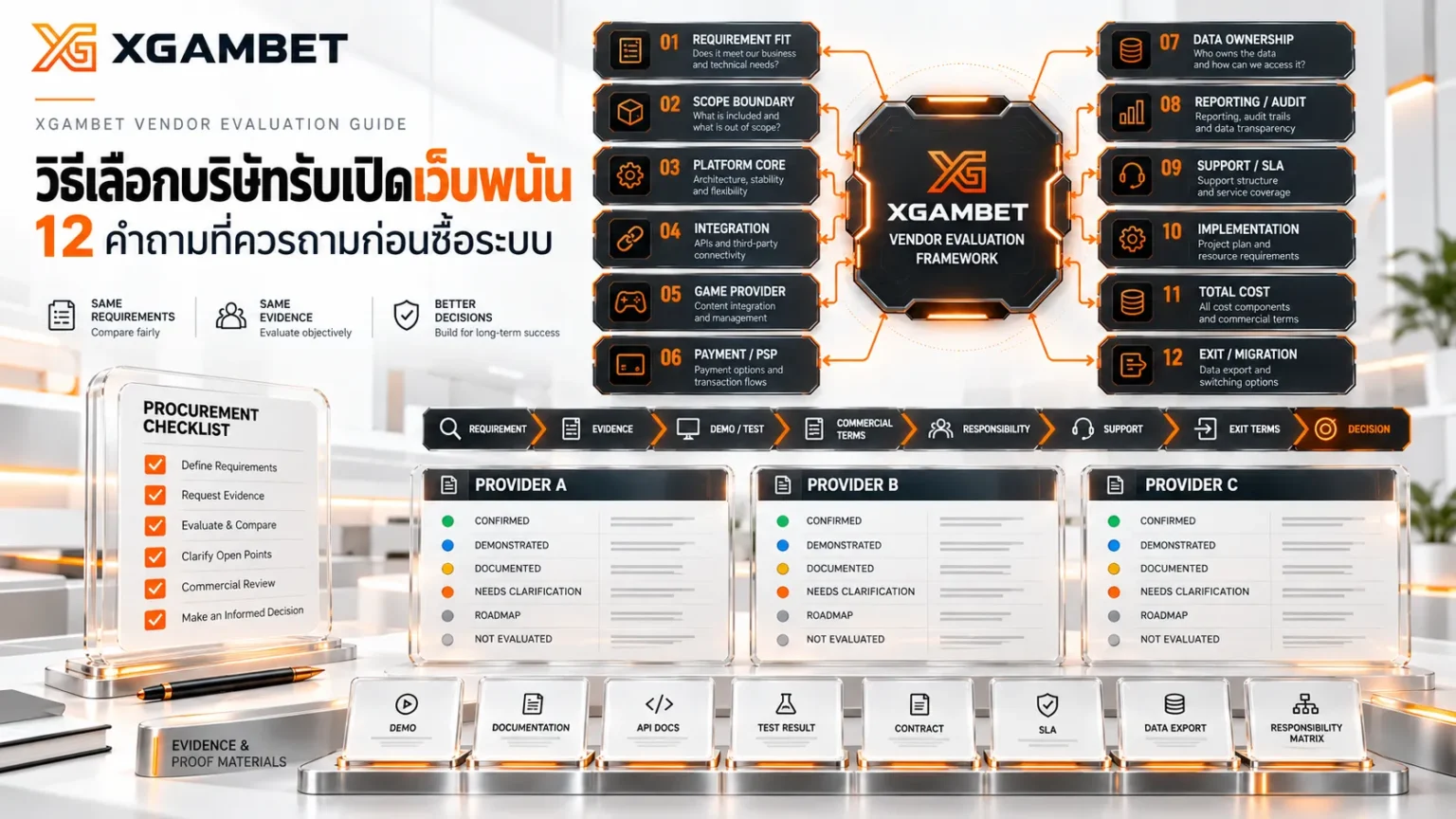
วิธีเลือกบริษัทรับเปิดเว็บพนัน: 12 คำถามที่ควรถามก่อนซื้อระบบ
การเลือก iGaming Platform Provider ไม่ควรตัดสินจากจำนวน Feature, ความประทับใจจาก Demo หรือ Setup Price เพียงอย่างเดียว เพราะสิ่งที่สำคัญกว่าคือ Provider สามารถตอบ Requirement ของ Project ได้จริงหรือไม่ อะไรอยู่ใน Scope ใครรับผิดชอบ Integration, Commercial Model เป็นแบบใด และหากวันหนึ่งต้องเปลี่ยนระบบ Data กับ Asset สามารถย้ายออกได้อย่างไร
วิธีเปรียบเทียบที่มีโครงสร้างคือส่ง Requirement ชุดเดียวกันให้ทุก Provider แล้วตรวจคำตอบด้วย Evidence เช่น Demo, Documentation, API Docs, Contract Clause, Sample Report และ Test Result แทนการใช้คำว่า “รองรับ” เป็นข้อสรุปเพียงอย่างเดียว
ON THIS PAGEสารบัญ
อย่าเริ่มจากคำถามว่า Provider ไหนมี Feature มากกว่า
Feature จำนวนมากไม่ได้หมายความว่าจะเหมาะกับ Project มากกว่า หาก Feature ที่เพิ่มขึ้นไม่เกี่ยวข้องกับ Requirement หลัก ขณะที่ Payment, Integration หรือ Data Requirement ที่ Project ต้องใช้จริงยังไม่ได้รับการยืนยัน
ไม่ใช่การจัดอันดับบริษัท แต่คือทำให้ Operator สามารถใช้ Requirement ของ Project ตัวเอง เป็นฐานในการตรวจว่า Scope, Technology, Commercial Model และ Operating Responsibility ของแต่ละข้อเสนอแตกต่างกันอย่างไร
ก่อนคุย Provider ให้เตรียม Requirement ชุดเดียวกันสำหรับทุกเจ้า
หากแต่ละ Provider ได้ Requirement คนละชุด Proposal ที่กลับมาจะเปรียบเทียบกันไม่ได้ เพราะ Scope และ Assumption ตั้งต้นต่างกัน
หาก Provider A ได้ Scope “Platform + Payment” แต่ Provider B ได้ “Platform + Payment + CRM + Custom Frontend” ตัวเลข Commercial ของสอง Proposal ไม่ควรถูกนำมาเทียบโดยตรง จนกว่าจะ Normalize Scope ให้เหมือนกัน
Provider เข้าใจ Business Requirement ของเราหรือไม่
แทนที่จะเริ่มจาก “ระบบมี Feature อะไรบ้าง” ให้ถามว่า Provider จะออกแบบ Architecture และ Scope จาก Requirement ที่ส่งให้ไว้อย่างไร
จาก Requirement นี้ คุณเสนอ Architecture และ Scope แบบไหน เพราะอะไร?
ควรตรวจว่า Provider ถามกลับเรื่องอะไร
หากได้รับ Package ทันทีโดยยังไม่ได้คุย Requirement ไม่จำเป็นต้องสรุปว่า Provider ไม่เหมาะ แต่ควรถามให้ชัดว่า Package ที่เสนอถูก Mapping กับ Requirement ของ Project อย่างไร
Scope ที่เสนอรวมอะไร และไม่รวมอะไร
Scope Boundary เป็นหนึ่งในจุดที่ควรทำให้ชัดที่สุด เพราะสิ่งที่เห็นใน Demo ไม่ได้หมายความว่า Feature นั้น รวมอยู่ใน Proposal ที่กำลังซื้อ
| Component | Included | Optional | Third-party | Custom |
|---|---|---|---|---|
| Platform | ตรวจ Proposal | ตรวจ Proposal | ตรวจ Proposal | ตรวจ Proposal |
| Backoffice | ตรวจ Proposal | ตรวจ Proposal | ตรวจ Proposal | ตรวจ Proposal |
| Payment | ตรวจ Proposal | ตรวจ Proposal | ตรวจ Proposal | ตรวจ Proposal |
| Game API | ตรวจ Proposal | ตรวจ Proposal | ตรวจ Proposal | ตรวจ Proposal |
| CRM | ตรวจ Proposal | ตรวจ Proposal | ตรวจ Proposal | ตรวจ Proposal |
| Affiliate | ตรวจ Proposal | ตรวจ Proposal | ตรวจ Proposal | ตรวจ Proposal |
| Frontend | ตรวจ Proposal | ตรวจ Proposal | ตรวจ Proposal | ตรวจ Proposal |
| Migration | ตรวจ Proposal | ตรวจ Proposal | ตรวจ Proposal | ตรวจ Proposal |
Platform Core และ System of Record อยู่ที่ไหน
System Architecture ควรบอกได้ว่าระบบใดถือ State สำคัญ และระบบใดเป็น Source ที่ใช้ยืนยันข้อมูลเมื่อเกิด Conflict
- อาจเกิด Balance Mismatch
- Duplicate Transaction
- Conflicting Status
- Reporting Inconsistency
หากต้องการดูองค์ประกอบของ Core System เพิ่มเติม สามารถอ่าน โครงสร้างระบบเว็บพนัน XGAMBET เพื่อใช้เป็นกรอบในการตั้งคำถามกับ Provider
Integration ทำอย่างไร และใครเป็น Owner
คำว่า “มี API” ยังไม่เพียงพอสำหรับประเมิน Integration เพราะยังต้องรู้ว่า API ใช้ทำอะไร ใคร Implement ใคร Test และใครดูแลเมื่อ Version เปลี่ยน
คำถามติดตามที่ควรใช้
- API รองรับ Use Case ใด
- ใครเป็นผู้ Implement
- ใครรับผิดชอบ Integration Testing
- ใคร Maintenance หลัง Go-live
- หาก API Version เปลี่ยน ใครรับผิดชอบการปรับระบบ
Game Provider และ Aggregator เชื่อมอย่างไร
จำนวนเกมไม่ใช่คำตอบทั้งหมด เพราะยังต้องตรวจ Market Availability, Integration Model, Commercial Agreement และ Responsibility ของการทดสอบ
Direct Provider
ตรวจว่าต้องทำ Contract หรือ Integration แยกกับ Provider แต่ละรายอย่างไร
Aggregator
ตรวจว่า Aggregator เป็นเพียง Technical Connection หรือรวม Commercial Relationship ส่วนใดไว้ด้วย
- Provider ที่ Project ต้องการอยู่ใน Scope หรือไม่
- เชื่อมแบบ Direct หรือ Aggregator
- Commercial Agreement อยู่กับใคร
- Provider ใช้ได้กับ Target Market หรือไม่
- หากเพิ่ม Provider ใหม่ Process เป็นอย่างไร
- ใครรับผิดชอบ Testing
สำหรับรายละเอียดด้าน Integration สามารถดู Game API และการเชื่อม Game Provider เพิ่มเติมได้
Payment Scope และ PSP Agreement อยู่กับใคร
Payment Integration ทางเทคนิค และ Commercial Agreement กับ Payment Service Provider เป็นคนละเรื่องที่ควรถูกตรวจแยก
Platform อาจมี Technical Connector พร้อมอยู่แล้ว แต่ Operator ยังต้องตรวจ Commercial Agreement, Merchant Account และ Responsibility กับ PSP ที่ต้องการใช้งานจริง
ดูภาพรวมของ Payment Flow ได้ที่ ระบบฝากถอนและ Payment XGAMBET
Data เป็นของใคร และเอาออกได้อย่างไร
Data Ownership ไม่ควรถูกถามด้วยคำถามเดียว แต่ต้องแยก Ownership, Access, Export, Portability และ Transition ออกจากกัน
ใครมีสิทธิตาม Contract ในข้อมูล
Operator เข้าถึงข้อมูลอะไรได้ระหว่างใช้งาน
สามารถนำข้อมูลออกใน Format ใด
ข้อมูลที่ Export นำไปใช้กับระบบใหม่ได้หรือไม่
ใครช่วยย้ายและมีกระบวนการอย่างไร
คำถามที่ควรตามต่อ
- Export ข้อมูลประเภทใดได้บ้าง
- Transaction History ได้หรือไม่
- Identifiers สำคัญอยู่ครบหรือไม่
- มี API หรือ Data Feed หรือไม่
- เมื่อ Terminate Contract จะเข้าถึงข้อมูลได้อย่างไร
Reporting และ Audit ตรวจอะไรย้อนหลังได้บ้าง
Dashboard ที่ดูสวยไม่เพียงพอ ควรทดลองค้นหา Drill-down และ Export จาก Scenario ที่ Operation ต้องใช้จริง
Support, SLA และ Incident Process เป็นอย่างไร
การถามเพียงว่า “มี Support 24/7 หรือไม่” ยังไม่บอกว่าเมื่อเกิด Critical Incident ทีมจะได้รับการดูแลแบบใด
หากมี SLA ให้ถามรายละเอียดเพิ่ม
- SLA วัดจาก Metric ใด
- Uptime Scope ครอบคลุม Component ไหน
- Maintenance Window ถูกนับอย่างไร
- Third-party ถูก Exclude หรือไม่
- ใช้ Reporting Source ใดเป็นหลักฐาน
- มี Remedy หรือ Process อย่างไร
Implementation และ Go-live Process เป็นอย่างไร
Timeline ควรถูกประเมินจาก Dependency และ Responsibility ไม่ใช่เพียงคำตอบว่าระบบสามารถเปิดได้ภายในกี่วัน
- ใครเป็น Project Owner
- Critical Dependency มีอะไรบ้าง
- Operator ต้องส่งข้อมูลหรือ Asset อะไร
- Third-party Onboarding ใครรับผิดชอบ
- Acceptance Criteria คืออะไร
- Change Request จัดการอย่างไร
- Go / No-Go ใครเป็นผู้ตัดสินใจ
Timeline Assumption คืออะไร และ Dependency ไหนอยู่นอก Provider Control?
Total Cost จริงประกอบด้วยอะไร
Setup Fee ไม่ใช่ Total Cost จึงควรขอ Commercial Model ที่แยก Cost Category ให้เห็นทั้งหมดตาม Scope จริง
ทุก Provider ควรถูกประเมินภายใต้ Assumption เดียวกัน เช่น Product, Integration, Module, Environment, Support Scope และ Volume Assumption เพื่อให้เห็น Cost Structure ที่เปรียบเทียบกันได้
หลัง Normalize Scope แล้วสามารถตรวจ แพ็กเกจ XGAMBET และขอบเขตแพ็กเกจ หรือ Proposal ของ Provider รายอื่น ด้วยโครงคำถามเดียวกัน
ถ้าวันหนึ่งต้องย้าย Provider จะออกอย่างไร
Exit Plan ควรถูกถามก่อนซื้อระบบ ไม่ใช่รอจนถึงวันที่ต้องการย้ายออก
ถ้าเราไม่ใช้ระบบนี้ต่อ จะย้ายออกอย่างไร?
- Data Export ทำได้จำกัด
- Integration เป็น Proprietary และย้ายต่อยาก
- Contract Exit มีข้อจำกัดสูง
- Custom Asset ไม่สามารถนำไปใช้ต่อได้
12 คำถามสำหรับ Vendor Evaluation
ใช้รายการนี้เป็นแกนหลักก่อนตัดสินใจ และบันทึก Evidence ของแต่ละคำตอบแยกกัน
หลักฐานอะไรควรขอแทนการฟังคำตอบว่า “ทำได้”
Claim สำคัญควรถูกผูกกับ Evidence ตามความเหมาะสมกับ Requirement นั้น
ใช้สถานะคำตอบให้เป็นระบบ
หาก Provider ระบุว่า “รองรับ” แต่ยังไม่มี Demo, Document หรือ Contract ให้บันทึกเป็นรายการที่ต้องยืนยันเพิ่ม แทนการสรุปว่า Feature นั้นพร้อมใช้งานแล้ว
Demo ควรใช้พิสูจน์ Requirement ไม่ใช่เป็น Sales Tour
ก่อนดู Demo ควรเตรียม Scenario ที่สัมพันธ์กับ Critical Workflow ของ Project แล้วให้ Provider แสดงขั้นตอนจริง
หากต้องการดู Workflow จากระบบ XGAMBET สามารถใช้ Demo ระบบ XGAMBET เป็นหนึ่งในขั้นตอนสำหรับตรวจ Requirement โดยไม่ควรใช้ Demo เพียงอย่างเดียวแทน Scope หรือ Contract
แยก Must-have ออกจาก Nice-to-have ก่อนเปรียบเทียบ
Feature บางอย่างมีประโยชน์ แต่ไม่ควรมีน้ำหนักเท่ากับ Requirement ที่หากขาดแล้ว Project ไม่สามารถเดินต่อได้
Must-have
Requirement ที่ขาดแล้ว Project ไม่สามารถใช้งานตาม Scope หลักได้
Nice-to-have
Capability ที่มีประโยชน์ แต่ไม่ได้เป็น Blocking Requirement
ตัวอย่าง Decision Gate
Decision Gate ช่วยป้องกันไม่ให้ Feature จำนวนมาก มาชดเชย Requirement หลักที่ยังไม่ผ่าน
8 Red Flags ที่ควรถามต่อ
Red Flag ในที่นี้ไม่ได้หมายถึงให้ตัด Provider ออกทันที แต่หมายถึงประเด็นที่ควรขอ Evidence หรือคำอธิบายเพิ่ม ก่อนตัดสินใจ
ทุก Requirement ตอบว่า “ทำได้” แต่ไม่มี Evidence
ขอ Demo, Document หรือ Contract ที่ยืนยัน Critical Requirement
Proposal ไม่แยก Third-party
ควรถามว่าอะไรเป็นของ Platform และอะไรต้องทำ Agreement แยก
Commercial Model ไม่อธิบาย Variable Cost
ควรทำให้ Cost Driver ที่ขึ้นกับ Usage หรือ Contract ชัดก่อนเปรียบเทียบ
Data Export ตอบไม่ชัด
ถาม Format, Historical Data, Identifier และ Transition Process เพิ่ม
ไม่มี Integration Owner
ควรกำหนดว่าใคร Implement, Test, Maintain และรับ Incident
Roadmap ถูกนำเสนอเหมือน Feature ที่พร้อมแล้ว
แยก Available Now, Committed Development และ Roadmap ออกจากกัน
SLA ไม่มีวิธีวัด
ถาม Metric, Scope, Exclusion และ Reporting Source
Exit Process ไม่มีในเอกสาร
ขอรายละเอียด Data, Asset, Notice และ Transition ให้ชัดก่อน Contract
รายละเอียดที่ช่วยแยก Capability ปัจจุบันออกจาก Assumption
นอกจาก 12 คำถามหลัก ยังมีรายละเอียดบางกลุ่ม ที่ช่วยให้ Commercial และ Technical Team เข้าใจสิ่งที่กำลังซื้อได้ชัดขึ้น
Documentation Quality
- API Docs
- Integration Docs
- Release Notes
- Error Codes
- Versioning
- Support Docs
Roadmap
- Available Now
- Committed Development
- Roadmap
- Idea
Customisation
- Configuration หรือ Code
- Ownership
- Upgrade Impact
- Maintenance Owner
- Regression Test
- Future Change
Security / Compliance Evidence
- Authentication
- Access Control
- Role / Permission
- Audit
- Security Process
- Incident Handling
- Data Location เมื่อเกี่ยวข้อง
หาก Requirement จำเป็นต่อ Launch ควรแยกสิ่งที่ Available Now ออกจากสิ่งที่ยังเป็น Planned หรือ Roadmap และขอ Commitment ที่เหมาะสมก่อนนำไปใช้เป็น Assumption ของ Project
อะไรควรขอเป็นลายลักษณ์อักษรก่อนตัดสินใจ
ประเด็นที่กระทบ Scope, Cost, Responsibility และ Exit ควรถูกบันทึก ในเอกสารที่สามารถอ้างอิงร่วมกันได้
ใช้ Requirement เดียวกันกับทุก Provider
Matrix นี้ใช้บันทึกคำตอบ โดยไม่ต้องให้คะแนนหรือประกาศ Winner
| Requirement | Provider A | Provider B | Provider C |
|---|---|---|---|
| Platform | ________ | ________ | ________ |
| Payment | ________ | ________ | ________ |
| Game API | ________ | ________ | ________ |
| Data Export | ________ | ________ | ________ |
| Support | ________ | ________ | ________ |
| TCO | ________ | ________ | ________ |
| Exit | ________ | ________ | ________ |
Proposal Comparison Template
- Provider
- ________________
- Required Scope
- ________________
- Confirmed Standard
- ________________
- Requires Configuration
- ________________
- Custom
- ________________
- Third-party
- ________________
- Not Confirmed
- ________________
- Commercial
- ________________
- Data / Exit
- ________________
- Open Questions
- ________________
แต่ Unknown ที่เกี่ยวข้องกับ Critical Requirement ควรถูก Resolve ก่อน Contract โดยเฉพาะ Payment, Data, Integration, Commercial Responsibility และ Exit
เมื่อมี Evaluation Criteria แล้ว ขั้นต่อไปคือเทียบ Scope จริง
หลังรวบรวม Requirement และคำถามครบแล้ว สามารถนำ Framework เดียวกันไปคุย บริการรับเปิดเว็บพนัน XGAMBET หรือ Provider รายอื่น เพื่อให้แต่ละฝ่ายตอบบน Scope เดียวกัน
หลักสำคัญคือไม่ควรตีความว่า Provider ใดเหมาะกับทุก Project ผู้ประกอบการควรใช้ Requirement, Evidence, Commercial Terms และ Operating Model ของ Project ตัวเองเป็นตัวกำหนดการตัดสินใจ
คำถามที่พบบ่อย
วิธีเลือกบริษัทรับเปิดเว็บพนันควรดูอะไรเป็นอันดับแรก
ควรเริ่มจาก Requirement Fit ก่อน โดยเตรียม Target Market, Product, Platform Scope, Payment, Integration, Frontend, Support และ Commercial Requirement ชุดเดียวกันเพื่อใช้กับทุก Provider
ควรเลือก Provider จากราคาหรือ Feature ก่อน
ไม่ควรใช้ราคา หรือ Feature Count เพียงตัวแปรเดียว ควรตรวจว่า Provider รองรับ Must-have Requirement ของ Project ได้หรือไม่ และ Scope ที่เสนอรวมอะไร เป็น Standard, Custom หรือ Third-party
ทำไมต้องถามเรื่อง Data Ownership
เพราะ Operator ควรรู้ทั้งสิทธิในข้อมูล, ระดับการเข้าถึง, วิธี Export, Portability และ Transition Process หากในอนาคตต้องเปลี่ยน Platform หรือยุติ Contract
Payment Integration กับ PSP Agreement ต่างกันอย่างไร
Payment Integration คือการเชื่อมระบบทางเทคนิค ส่วน PSP Agreement คือความสัมพันธ์เชิง Commercial และเงื่อนไขการใช้บริการกับ Payment Service Provider ซึ่งไม่ควรถูกตีความว่าเป็นสิ่งเดียวกัน
SLA ควรถามรายละเอียดอะไร
ควรถาม Metric ที่ใช้วัด, Component ที่อยู่ใน Scope, Maintenance Exclusion, Third-party Exclusion, Reporting Source และ Process หรือ Remedy ที่ระบุไว้ใน Agreement
Demo ใช้เปรียบเทียบ Provider อย่างไร
ควรให้ทุก Provider ทดสอบ Scenario เดียวกัน เช่น Search Transaction, Payment Pending, Permission, Error, Reporting และ Audit เพื่อดู Critical Workflow แทนการดู Sales Tour ทั่วไป
ทำไมต้องถาม Exit Plan ก่อนซื้อระบบ
เพราะ Exit Terms มีผลต่อ Data Export, Historical Data, Frontend Asset, Custom Integration, Domain, Migration และ Transition หากต้องเปลี่ยน Provider ในอนาคต
ควรขออะไรเป็นลายลักษณ์อักษรก่อนตัดสินใจ
ควรมีอย่างน้อย Scope, Included Modules, Exclusions, Integration Responsibility, Commercial Model, Third-party Cost, Support, Data Rights, Exit Terms และ Acceptance Criteria ตามที่เกี่ยวข้อง
ใช้ Requirement และ Evidence ชุดเดียวกันก่อนเลือก Provider
ส่ง Requirement เดียวกันให้ทุก Provider แล้วขอให้แยก Standard, Configuration, Custom และ Third-party ให้ชัด จากนั้นใช้ Demo และ Documentation ยืนยัน Critical Workflow ตรวจ Commercial Model บน Scope เดียวกัน และอ่าน Data กับ Exit Terms ก่อนตัดสินใจ