
XGAMBET • CUSTOMER DATA DECISION GUIDE
CDP กับ CRM ต่างกันอย่างไร และใช้ข้อมูลลูกค้าคนละแบบอย่างไร
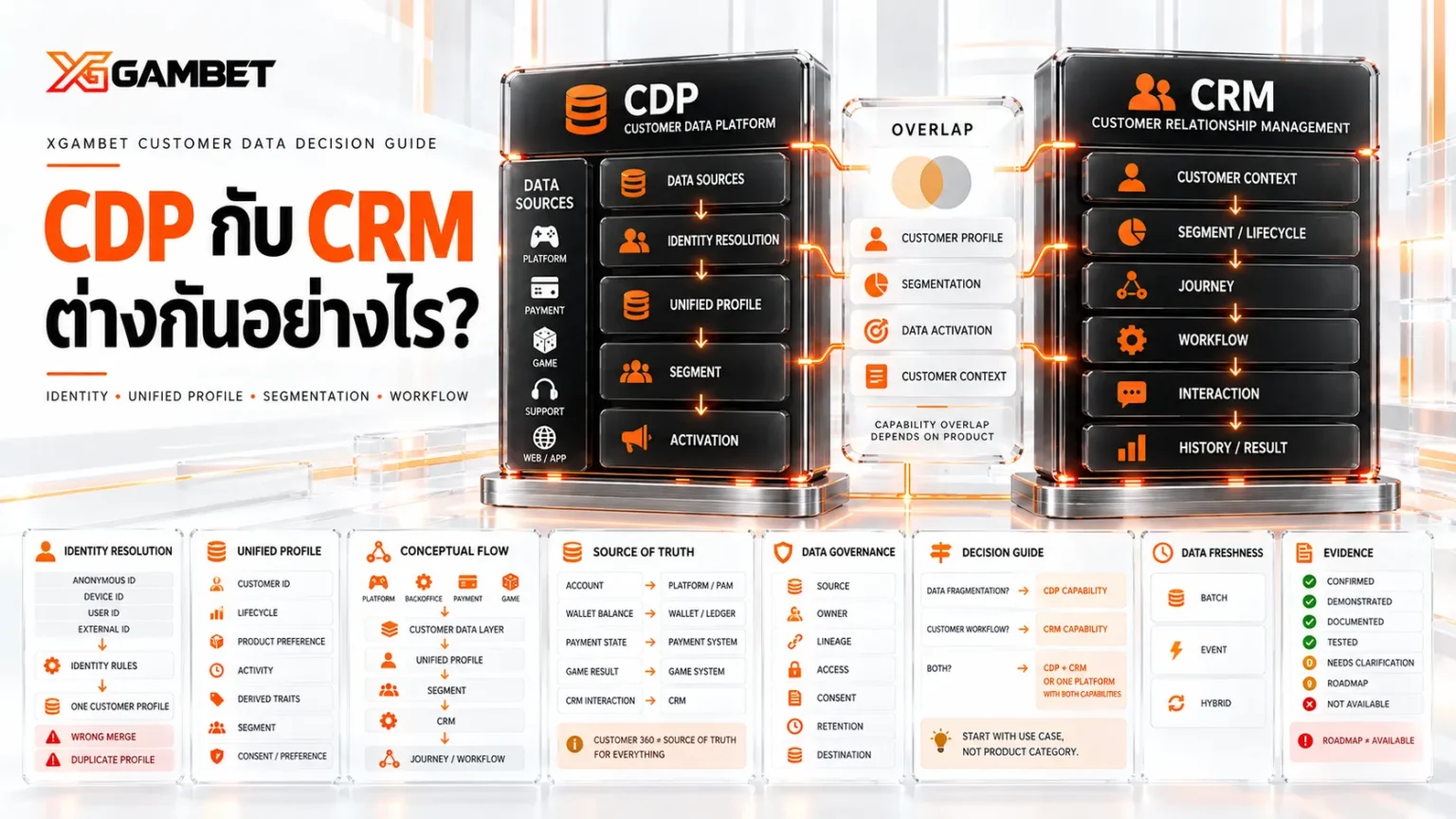
CDP และ CRM ต่างเกี่ยวข้องกับข้อมูลลูกค้า แต่มี Primary Responsibility คนละแบบ: CDP เน้นการรวมและเชื่อม Customer Data จากหลายระบบ ขณะที่ CRM เน้นการนำข้อมูลที่เกี่ยวข้องกับลูกค้าไปบริหาร Relationship, Journey และ Workflow
สิ่งที่ทำให้การเลือกยากขึ้นคือ Modern Platform สามารถมี Capability ทับซ้อนกันได้ เช่น Unified Profile, Segmentation, Journey หรือ Data Activation ดังนั้น Operator ไม่ควรตัดสินจากคำว่า “CDP” หรือ “CRM” บนชื่อ Product แต่ควรเริ่มจากปัญหาที่ต้องแก้, Data Source, Identity, Workflow และ Architecture จริงของ Project
ON THIS PAGEสารบัญ
เริ่มจากคำถามง่ายที่สุด: เรามีปัญหาเรื่อง “ข้อมูล” หรือ “Workflow”
ก่อนเลือก Technology ให้แยกปัญหาออกก่อนว่า Project กำลังติดขัดที่การรวมข้อมูลลูกค้า หรือการนำข้อมูลไปบริหาร Customer Relationship และ Workflow
ข้อมูลกระจายและ Identity ไม่ชัด
- ข้อมูลลูกค้าอยู่หลายระบบ
- ไม่รู้ว่า Identifier หลายตัวเป็นคนเดียวกันหรือไม่
- Anonymous กับ Known User เชื่อมกันไม่ได้
- สร้าง Unified Profile ได้ยาก
- แต่ละ Tool ใช้ Customer Data คนละชุด
ข้อมูลมีแล้วแต่บริหาร Customer Journey ยาก
- ทีมไม่รู้ว่า Customer อยู่ Lifecycle Stage ไหน
- Journey และ Interaction กระจาย
- ไม่มี Workflow สำหรับ Segment
- Case, Task หรือ Communication ไม่ต่อเนื่อง
- ทีมต้องการบริหาร Relationship อย่างเป็นระบบ
อาจต้องใช้ CDP + CRM หรือ Platform เดียว ที่รองรับ Capability ทั้งสองด้าน โดยต้องตรวจความสามารถจริง ไม่ใช่ตัดสินจากชื่อ Product
CDP และ CRM ต่างกันที่ Responsibility หลัก
Customer Data Platform
โดยทั่วไป CDP มีหน้าที่รับ Customer Data จากหลาย Source, จัดระเบียบข้อมูล, เชื่อม Identity, สร้าง Persistent / Unified Profile และทำข้อมูลนั้น ให้ระบบอื่นนำไปใช้ต่อได้
Customer Relationship Management
โดยทั่วไป CRM มีหน้าที่ช่วยทีมจัดการ Customer Relationship, Interaction, Lifecycle, Journey, Case, Task และ Communication Workflow ตาม Scope ของ Product
Modern Product หลายระบบ มี Data Unification, Segmentation, Customer Model, Journey และ Activation ซ้อนกันมากขึ้น จึงต้องตรวจ Capability จริง ของแต่ละ Product
ตารางเปรียบเทียบ CDP กับ CRM
| ประเด็น | CDP | CRM |
|---|---|---|
| Primary Purpose | รวมและจัด Customer Data | บริหาร Relationship และ Workflow |
| Data Sources | มักรับจากหลายระบบ | CRM Data + Integrations ตาม Product |
| Identity Resolution | มักเป็น Core Capability | ขึ้นกับ Product |
| Unified Profile | มักเป็นแกนสำคัญ | อาจมีหรือพัฒนาความสามารถในลักษณะเดียวกัน |
| Segmentation | มักสร้าง Audience จาก Data/Behaviour | มักใช้ Segment สำหรับ Journey/Workflow |
| Workflow | ไม่ใช่ Core ของ CDP ทุกประเภท | มักเป็น Capability สำคัญ |
| Activation | ส่ง Profile/Audience ไป Downstream Systems | ใช้ Data เพื่อ Journey, Campaign หรือ Action |
| Primary Users | Data / Marketing / Product | CRM / Marketing / Service / Operation |
ตารางนี้เป็น Conceptual Responsibility Comparison ความสามารถจริงแตกต่างตาม Product และ Architecture
หากต้องการดู Owner Page สำหรับบริบทระบบของ XGAMBET สามารถดู ระบบ CRM เว็บพนันและ CDP XGAMBET โดยบทความนี้ยังคงเน้นการเปรียบเทียบ Responsibility และ Decision Framework ไม่ใช่ Feature List
CDP กับ CRM อาจเห็นข้อมูลเดียวกัน แต่ใช้ข้อมูลคนละ Purpose
ข้อมูลที่ CDP มักสนใจ
ข้อมูลที่ CRM มักใช้
รับ Deposit Event เพื่อรวมกับ Behaviour อื่น แล้วสร้าง Unified Profile, Trait หรือ Segment
ใช้ Segment หรือ Deposit Context เพื่อกำหนด Customer Journey, Task หรือ Workflow
CDP ไม่จำเป็นต้องเป็นเจ้าของข้อมูลต้นฉบับทุกประเภท
CDP สามารถรับ Copy, Event หรือ Profile Data จาก Source System แล้วนำไปสร้าง Customer View โดย Source System เดิม ยังเป็น Authoritative Source ของ Data Domain นั้น
นี่คือ Conceptual Flow ไม่ใช่ Internal Architecture ของ XGAMBET
Platform และ ระบบหลังบ้านเว็บพนัน มักเกี่ยวข้องกับ Operational Data เช่น Account State, Transaction, Wallet Context, Product Activity และ Operational Action ซึ่งมี Responsibility ต่างจาก Customer Data Layer
Identity Resolution คือจุดที่ CDP แตกต่างอย่างชัดเจน
CDP บางประเภท ใช้ Identifier Strategy เพื่อเชื่อม Anonymous ID, Device ID, User ID และ External ID เข้ากับ Customer Identity เดียว ตาม Rule และ Configuration ที่กำหนด
ต้องมี Identifier Strategy, Matching Rules, Merge Protection และ Process สำหรับตรวจปัญหา Identity ที่ผิด
คนสองคนถูกมองเป็นคนเดียว
อาจทำให้ Segmentation, Communication, Analytics, Privacy และ Customer Experience ผิดไปด้วย
คนเดียวถูกมองเป็นหลายคน
อาจทำให้ Journey ขาด, Segment ผิด, Communication ซ้ำ และ Reporting ไม่ครบ
CRM บาง Product ก็สามารถมี Data Unification หรือ Identity Capability ได้มากขึ้น จึงไม่ควรสรุปว่า CRM ไม่มี Identity Resolution เสมอ แต่ต้องตรวจ Capability จริง ของ Product
Unified Profile ไม่ใช่การ Copy ทุก Field มารวมหน้าจอเดียว
Unified Profile ควรเป็น Customer Identity, Attributes และ Relevant History ที่เพียงพอต่อ Use Case และสามารถถูกใช้โดยทีม หรือ Downstream System ที่เกี่ยวข้อง
ควรหมายถึง View ที่เพียงพอต่อ Use Case ไม่ใช่การ Copy Database ทั้ง Platform มาไว้ใน CDP
Data Minimisation
ก่อนเพิ่ม Field ควรถามว่า ข้อมูลนี้ใช้ทำอะไร, ใครต้องใช้, ต้องเก็บนานแค่ไหน และต้องส่งไปที่ใด ไม่ควรเก็บข้อมูลทุกอย่าง เพียงเพราะ “อาจใช้ในอนาคต”
Segmentation อยู่ได้ทั้งใน CDP และ CRM
Data / Audience Context
อาจสร้าง Audience จาก Unified Behaviour, Attributes, Event History หรือ Derived Trait
Workflow Context
อาจสร้างหรือใช้ Segment เพื่อ Journey, Campaign, Service หรือ Lifecycle Workflow
การมี Segmentation จึงไม่ใช่หลักฐานเพียงพอ ที่จะจัด Product ว่าเป็น CDP หรือ CRM ต้องดูว่า Data ถูกสร้าง, Resolve, Govern และนำไปใช้ใน Architecture อย่างไร
CDP และ CRM ไม่ได้เป็น Real-time หรือ Batch แบบตายตัว
Periodic Data Processing
เหมาะกับ Historical Dataset, Periodic Sync หรือ Large Dataset Processing ตาม Architecture
Recent Activity
เหมาะกับ Action, Trigger, Login, Transaction หรือ Session Behaviour ที่ต้องส่งเป็น Event
ใช้สองแบบร่วมกัน
Architecture หนึ่ง สามารถใช้ Historical Batch ร่วมกับ Event-driven Data ได้
คำถามเรื่อง Data Freshness
ข้อมูลต้นทาง Update อย่างไร?
Event เดินไปยัง Data Layer เมื่อไร?
Profile ถูก Update ด้วย Mechanism ใด?
Membership เปลี่ยนเมื่อไร?
CRM ได้ Data เมื่อ Stage ใด?
ตัวเลข Latency หรือ Refresh Frequency ต้องมาจาก Vendor และ Architecture จริง ไม่ควรใช้ค่ากลางแบบ Universal
Customer Profile ที่ดีต้องตอบได้ว่าแต่ละ Attribute มาจากไหน
Data Lineage ช่วยให้ทีมรู้ว่า เมื่อข้อมูลผิดควรแก้ที่ Source ใด และช่วยด้าน Governance, Debugging, Trust และ Reconciliation
Derived Attribute คืออะไร
ข้อมูลเหล่านี้เป็น Calculated / Derived Data ไม่ใช่ Raw Event และ Product บางประเภท สามารถคำนวณ Trait หรือ Audience เพื่อส่งต่อไปยัง CRM หรือ Downstream System ได้
CDP กับ CRM ทำงานร่วมกันได้อย่างไร
ในบาง Architecture CRM Interaction สามารถส่งกลับเข้าสู่ CDP เพื่อให้ Profile รู้ว่าลูกค้าได้รับ Message อะไร, เปิดหรือไม่ หรือมี Response อย่างไร
Platform, Backoffice, CDP และ CRM มี Responsibility คนละชั้น
ตัวอย่างเช่น Backoffice อาจบอกว่า Transaction หนึ่งยัง Pending ขณะที่ CDP อาจได้รับ Transaction Event เพื่อ Update Profile หรือ Segment และ CRM อาจใช้ Segment นั้น เป็น Context ของ Workflow
Wallet Balance, Payment Final State, Game Result และ Financial Ledger ควรอ้างอิง Authoritative System ของ Data Domain นั้น
แบ่ง Customer Data เป็น Domain ก่อนเลือก Technology
| Data | Source | Owner | CDP | CRM | Backoffice |
|---|---|---|---|---|---|
| Account ID | Platform | Platform | Copy / Profile | Reference | Operational |
| Wallet Balance | Wallet | Wallet | Avoid / Derived if needed | Avoid / Reference | Operational |
| Login Event | Platform | Platform | Event | Trigger / Context | View if available |
| Segment | CDP / CRM | Data / CRM | Create | Consume / Create | Usually No |
| Campaign History | CRM | CRM | May Ingest | Source | Usually No |
ตารางนี้เป็น Conceptual Data Ownership Example ไม่ใช่ Architecture Specification ของ XGAMBET
Single Customer View ไม่ได้หมายความว่า CDP เป็น Source of Truth ของทุกอย่าง
Architecture สามารถมี Authoritative Source หลายระบบ สำหรับข้อมูลคนละ Domain ขณะที่ CDP ทำหน้าที่รวม View จากหลาย Source เพื่อการใช้งานด้าน Customer Data
Consent ต้องเดินตาม Data Flow ไม่ใช่หยุดอยู่ที่ Source
หาก CDP สร้าง Segment แล้วส่งไป CRM และ CRM นำ Segment ไปใช้ใน Customer Communication Operator ต้องรู้ว่า Consent หรือ Communication Preference ถูกตรวจที่ Stage ใด และ System ใดเป็น Authoritative Source
เก็บข้อมูลอะไร?
ใช้เพื่ออะไร?
มาจากระบบไหน?
ใครเข้าถึงได้?
ส่งไปที่ไหน?
เก็บนานแค่ไหน?
ใช้ Requirement ใด?
Workflow เป็นอย่างไร?
Privacy Law, Consent, Data Retention และ Marketing Communication Requirement แตกต่างตาม Jurisdiction Operator ควรตรวจข้อกำหนด ที่ใช้กับ Target Market และ Use Case ของตน
เมื่อไรควรเลือก CRM, CDP หรือใช้ทั้งสอง
เมื่อ Data Source ไม่ซับซ้อน แต่ Workflow ยังขาด
- Customer Identity ค่อนข้างชัด
- Data ที่จำเป็นพร้อมใช้แล้ว
- ต้องการ Lifecycle Workflow
- ต้องการ Customer Interaction
- ต้องการ Journey / Task / Case
เมื่อ Customer Data กระจายหลายระบบ
- Identity ซ้ำหรือไม่ชัด
- Anonymous + Known Journey ต้องเชื่อม
- Behavioural Data จำนวนมาก
- ต้องสร้าง Unified Profile
- ต้องส่ง Audience ไปหลาย Downstream Tools
เมื่อมีทั้ง Data และ Workflow Problem
- ต้อง Resolve Identity
- ต้องสร้าง Unified Customer View
- ต้อง Segment จากหลาย Source
- ต้องทำ Customer Journey
- ต้องส่ง Result กลับเข้าสู่ Data Layer
หาก Platform, CRM หรือ Data Stack ที่มีอยู่ สามารถตอบ Use Case ได้ครบ ไม่ควรเพิ่ม CDP เพียงเพราะชื่อ Technology ดูทันสมัย
CDP vs CRM Decision Matrix
| Requirement | CDP Priority | CRM Priority | Both / Depends |
|---|---|---|---|
| Multi-source Ingestion | High | Depends | |
| Identity Resolution | High | Depends | |
| Unified Profile | High | Medium / High | Overlap |
| Customer Interaction | Low / Depends | High | |
| Journey Workflow | Depends | High | |
| Segmentation | High | High | Overlap |
| Data Activation | High | High | Overlap |
| Service / Case Workflow | Low | High | |
| Data Governance | High | Medium / High | |
| Operational Transaction Control | No | No | Backoffice |
Matrix นี้เป็น Conceptual Responsibility Matrix ไม่ใช่ Universal Product Specification
Demo ต้องพิสูจน์ Data Flow ไม่ใช่แค่โชว์ Profile หน้าสวย
CDP Demo Scenario
Identity Merge
Anonymous Activity → Login / Identify → ตรวจว่า History เชื่อมเข้าสู่ Profile อย่างไร
Duplicate Profile
ให้ Vendor อธิบาย Duplicate Detection, Wrong Merge และ Correction Process
Segment
สร้าง Segment จาก Behaviour + Transaction-derived Attribute แล้วตรวจ Membership
Activation
ส่ง Segment ไปยัง CRM/Destination แล้วตรวจว่า Data ใดถูกส่งจริง
CRM Workflow Scenario
Integration Checklist
หากต้องการใช้ Demo เพื่อประเมิน Data Workflow สามารถดู Demo ระบบ XGAMBET แล้วกำหนด Scenario ตาม Data Requirement ของ Project
Customer Data Architecture ต้องมีวิธีตรวจและ Recover เมื่อ Data Flow ผิด
Event ไม่เข้า CDP
ต้องรู้ว่า Detect, Retry, Alert และ Replay ได้อย่างไร ตาม Product
Customer Merge ผิด
Detect → Investigate → Correct → Assess Downstream Impact
Segment ไม่ Sync ไป CRM
ตรวจ Segment, Delivery, CRM Membership และ Error / Retry
Consent เปลี่ยน
ตรวจ Source → Profile → CRM → Future Workflow
เปรียบเทียบ Requirement ก่อนเลือก Tool เพิ่ม
| Requirement | Must-have | CDP | CRM | Existing System | Evidence | Gap |
|---|---|---|---|---|---|---|
| Identity Resolution | ||||||
| Unified Profile | ||||||
| Segmentation | ||||||
| Journey | ||||||
| Consent | ||||||
| Activation | ||||||
| Data Lineage | ||||||
| Backoffice Integration |
Critical Data หรือ Identity Capability ต้อง Verify จาก Evidence ก่อนนำไปใช้ตัดสินใจ
อย่าซื้อ Technology เพื่อแก้ปัญหาผิดชั้น
Data Quality ยังเสีย
หาก Source Data ผิด, ไม่ครบ หรือ Identifier ไม่สม่ำเสมอ CDP ไม่ได้ทำให้ Data ถูกต้องเองเสมอไป
Identity ยังเสีย
หาก CRM รับ Duplicate Profile, ID ผิด หรือ Data Fragmented การเพิ่ม Workflow อาจขยายปัญหาแทนแก้ปัญหา
Tool เยอะเกิน Use Case
CDP + CRM + Warehouse + Automation + Analytics ทุกตัว สามารถเพิ่ม Integration, Cost, Governance และ Failure Point
เลือก Architecture ที่เล็กพอจะบริหารได้ แต่ครบพอจะแก้ Problem ของ Project จริง
TCO ของ CDP/CRM ไม่ใช่แค่ Software License
ต้นทุนจริง ต้องประเมินจาก Requirement, Data Volume, Integration, Team และ Commercial Agreement ของ Vendor ที่เลือก ไม่ควรใช้ตัวเลขสมมติ เป็น Universal Cost
8 จุดที่ควรถามต่อก่อนเลือก Vendor
10 คำถามที่ควรถามก่อนเลือกระบบ CDP หรือ CRM
- ระบบรับข้อมูลจาก Source อะไรได้?
- Identity Resolution ทำงานอย่างไร?
- Unified Profile เก็บข้อมูลอะไร?
- Anonymous กับ Known Identity เชื่อมกันอย่างไร?
- Segment สร้างจาก Data อะไร?
- Data Update แบบ Batch / Event อย่างไร?
- Profile หรือ Segment ส่งไป Destination ไหนได้?
- Consent / Preference ถูกจัดการอย่างไร?
- Wrong Merge หรือ Duplicate Profile แก้อย่างไร?
- CDP/CRM ทำหน้าที่ใด และ Source System ไหนยังถือข้อมูลต้นฉบับ?
คำถามเกี่ยวกับ CDP และ CRM
CDP กับ CRM ต่างกันอย่างไร?
โดยทั่วไป CDP เน้นการรับข้อมูลจากหลาย Source, Resolve Identity, สร้าง Unified Profile และส่ง Data ไปใช้ต่อ ขณะที่ CRM เน้น Customer Relationship, Interaction, Journey และ Workflow แต่ Modern Product สามารถมี Capability ทับซ้อนกันได้
CRM เก็บข้อมูลลูกค้าเหมือน CDP หรือไม่?
CRM สามารถเก็บ Customer Data และบาง Product มี Unified Profile, Segmentation หรือ Identity Capability ได้ แต่ต้องตรวจ Responsibility และ Data Architecture จริง ไม่ควรตัดสินจาก Product Label
CDP เว็บพนันใช้ทำอะไร?
ในบริบททั่วไป CDP สามารถใช้รวม Customer Data จาก Platform, Payment, Product, Support หรือระบบอื่น เพื่อ Resolve Identity, สร้าง Profile, Segment และส่งข้อมูลไปยัง Downstream System ตาม Use Case
Identity Resolution คืออะไร?
คือกระบวนการเชื่อม Identifier และ Interaction จากหลาย Touchpoint ให้สัมพันธ์กับ Customer Identity ที่ถูกต้อง ผ่าน Identifier Strategy และ Matching Rules
Unified Customer Profile คืออะไร?
คือ Customer Identity, Attributes และ Relevant History ที่รวมจาก Source ที่เกี่ยวข้อง เพื่อให้ทีมและระบบอื่น ใช้งาน Customer Context ได้อย่างสอดคล้อง
ต้องมี CDP และ CRM พร้อมกันหรือไม่?
ไม่จำเป็นเสมอไป หากระบบปัจจุบัน สามารถแก้ Use Case ด้าน Data และ Workflow ได้ครบ การเพิ่ม Tool ใหม่ อาจไม่จำเป็น
CRM ใช้แทน Backoffice ได้หรือไม่?
ไม่ควรถือว่าใช้แทนกันได้โดยอัตโนมัติ CRM มุ่งที่ Relationship, Journey และ Interaction ส่วน Backoffice มุ่ง Operational Control เช่น Account และ Transaction ตาม Architecture
CDP ควรเป็น Source of Truth ของ Wallet หรือไม่?
โดยทั่วไปไม่ควรถือว่า CDP เป็น Financial Ledger หาก Architecture ไม่ได้ออกแบบเช่นนั้น Wallet Balance ควรอ้างอิง Wallet/Ledger ที่เป็น Authoritative Source
ก่อนเลือกระบบ CDP/CRM ควร Demo อะไร?
ควรทดสอบ Data Source, Identity Resolution, Duplicate Profile, Unified Profile, Segmentation, Activation, CRM Journey, Consent, Failed Delivery, Retry และ Data Correction ตาม Requirement จริง
เลือกจากปัญหาที่ต้องแก้ ไม่ใช่เลือกจากคำว่า CDP หรือ CRM
หาก Customer Data กระจายหลายระบบ และ Identity เชื่อมกันไม่ได้ ให้ตรวจ Capability ด้าน Data Collection, Identity Resolution และ Unified Profile ก่อน แต่หาก Data พร้อมแล้ว และทีมต้องการบริหาร Customer Journey, Interaction และ Workflow ให้ตรวจ CRM Capability เพิ่ม และถ้า Platform เดียว รองรับทั้งสองด้าน ให้ประเมินจาก Use Case, Evidence และ Integration จริง ก่อนเพิ่ม Technology ใหม่