XGAMBET GLOBAL • BUSINESS MODEL GUIDE
B2B กับ B2C เว็บพนันต่างกันอย่างไร
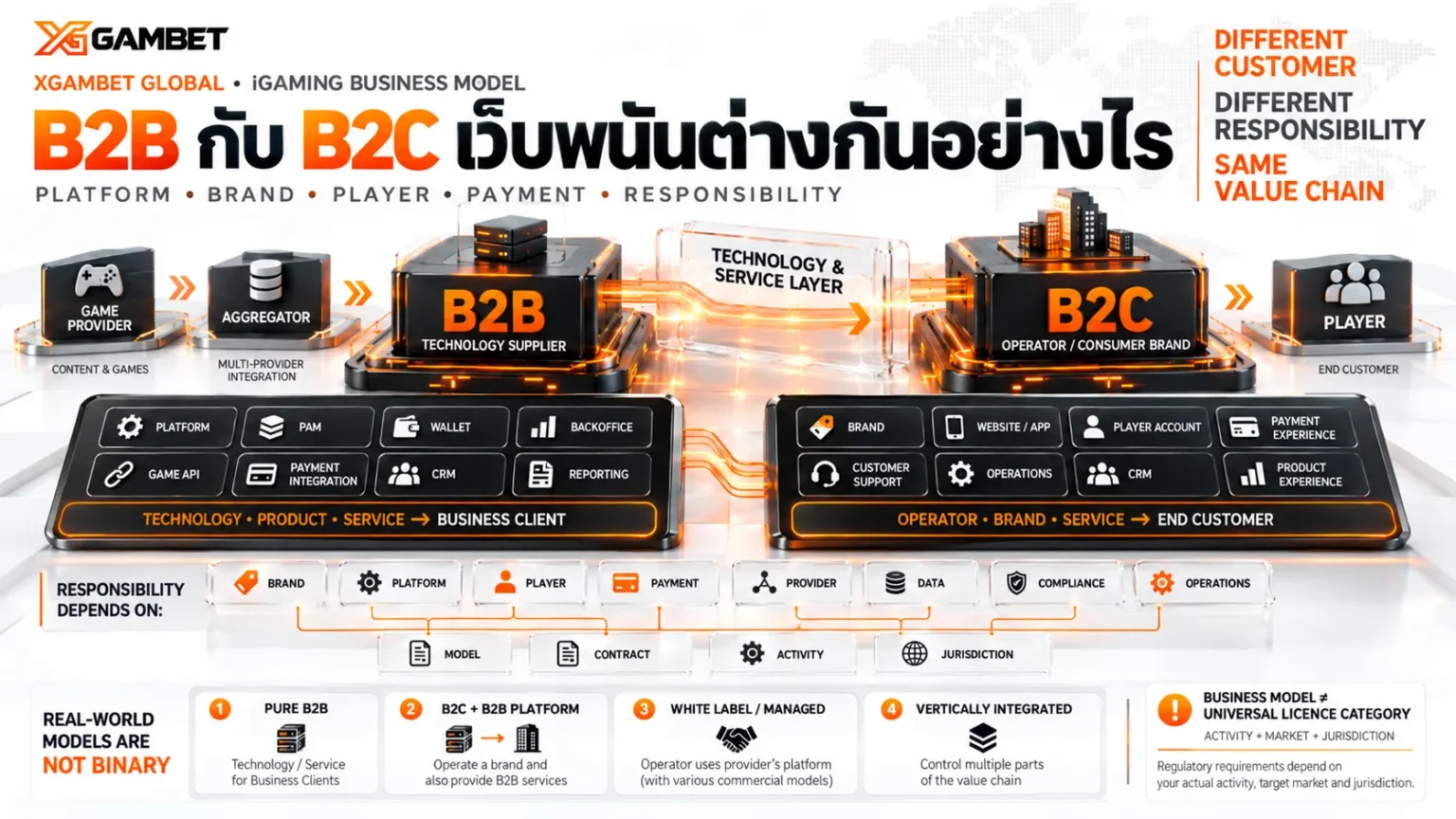
B2B กับ B2C ในธุรกิจ iGaming ไม่ได้ต่างกันเพียงว่า ฝั่งหนึ่ง “ขายระบบ” และอีกฝั่ง “เปิดเว็บเอง” ความต่างที่สำคัญกว่าคือใครเป็นลูกค้าโดยตรง ใครถือ Brand, Platform, Player Relationship, Payment, Provider Contract, Data, Operations และ Regulatory Responsibility ของแต่ละ Activity
ON THIS PAGEสารบัญ
วิธีที่ง่ายที่สุดในการแยก B2B กับ B2C
ให้เริ่มจากคำถามเดียวก่อนว่า “ลูกค้าที่จ่ายเงินให้ธุรกิจโดยตรงคือใคร?”
Business เป็นลูกค้า
ถ้าธุรกิจขาย Platform, Software, Game Content, Integration หรือ Service ให้ Operator หรือบริษัทอื่น Relationship หลักมักเป็น B2B
End Customer เป็นลูกค้า
ถ้าธุรกิจมีความสัมพันธ์โดยตรงกับ Player ผ่าน Brand, Website หรือ App และให้ Consumer Gaming Service Relationship หลักมักเป็น B2C
แต่ Definition นี้ยังไม่พอสำหรับ Project จริง เพราะองค์กรหนึ่งสามารถมีทั้ง B2B Activity และ B2C Activity หรือใช้ White Label, Managed Service, Turnkey และ Hybrid Model ที่แบ่ง Responsibility กันหลายฝ่ายได้
B2B iGaming คืออะไร
B2B iGaming คือ Business Model ที่บริษัทนำ Technology, Content, Infrastructure หรือ Service ไปให้ธุรกิจอื่นใช้ในการดำเนิน Gaming Operation
ลูกค้าของ B2B Provider จึงอาจเป็น Operator, Gaming Brand, Platform Company, Aggregator หรือธุรกิจอื่นตาม Product ที่ขาย
ตัวอย่าง Product หรือ Service ฝั่ง B2B
- Platform Provider
- Game Provider
- Game Aggregator
- PAM / Player Account Technology
- Payment Technology / Integration
- CRM / CDP Technology
- Affiliate Technology
- Data / Analytics
- Managed Services
ไม่ได้หมายความว่า B2B Provider ทุกราย ต้องให้บริการครบทุก Layer Scope จริงต้องดูจาก Product, Contract และ Responsibility ที่ตกลงกัน
B2C iGaming คืออะไร
B2C ในบริบท iGaming มักหมายถึง Operator หรือ Consumer-facing Gaming Brand ที่ให้บริการแก่ End Customer โดยตรง
B2C Operator จึงต้องพิจารณา Consumer-facing Experience มากกว่าตัว Platform อย่างเดียว เช่น Account Lifecycle, User Journey, Customer Support, Communication, Payment Experience และ Product Experience
B2B กับ B2C อยู่ใน Value Chain เดียวกันอย่างไร
Project หนึ่งสามารถมีบริษัท B2B หลายราย อยู่เบื้องหลัง Consumer-facing Operator เพียงรายเดียว
Game Provider, Aggregator และ Platform Provider อาจเป็นคนละบริษัททั้งหมด ก่อน Technology และ Content จะไปถึง Operator ที่มี Consumer Relationship
เพราะฉะนั้นคำถามที่ว่า “จะทำ B2B หรือ B2C?” อาจไม่ใช่คำถามแรกที่ดีที่สุด
คำถามที่แม่นกว่าคือ “ธุรกิจเราจะอยู่ตรงไหนใน Value Chain และเราจะทำอะไรเองหรือซื้ออะไรจาก Supplier?”
MGA กับ UKGC ใช้ Classification ต่างกันอย่างไร
คำว่า B2B และ B2C เป็นคำที่ใช้ได้ดีในการอธิบาย Business Relationship แต่ไม่ควรนำไปใช้เป็น Universal Legal Classification สำหรับทุกประเทศ
Malta Gaming Authority
Malta ใช้ Classification ที่แยก Gaming Service Licence ในลักษณะ B2C และ Critical Gaming Supply Licence ในลักษณะ B2B
Great Britain / UKGC
UK Gambling Commission แยก Licence ตาม Activity มากกว่า เช่น Remote Casino Operation, Gambling Software Supply หรือ Game Hosting
ดังนั้น Business Model Terminology ไม่ได้เท่ากับ Regulatory Licence Category เสมอไป ชื่อ Licence และ Responsibility ต้องตรวจตาม Activity, Market และ Jurisdiction
B2B vs B2C iGaming Comparison Table
| ประเด็น | B2B iGaming | B2C iGaming |
|---|---|---|
| Direct Customer | Business / Operator | End Customer / Player |
| Core Value | Technology / Product / Service | Consumer Gaming Service |
| Brand | อาจอยู่เบื้องหลัง Consumer Brand | โดยทั่วไปเป็น Consumer-facing Brand |
| Platform | มักพัฒนา จัดหา หรือดูแล Technology | ใช้ Platform จาก Supplier หรือสร้างเอง |
| Player Relationship | โดยทั่วไปเป็น Indirect Relationship | โดยทั่วไปมี Direct Relationship |
| Games | อาจ Integrate / Aggregate / Supply | นำ Product Mix ไปให้ Players ใช้งาน |
| Payment | อาจจัด Technology / Connector | Operational / Merchant Relationship มักเกี่ยวข้อง |
| Support | Technical / Account / B2B Support | Player / Customer Support |
| Regulation | Supplier Activity ตาม Jurisdiction | Consumer Operating Activity ตาม Jurisdiction |
| Revenue | Software / Service / Commercial Fees | Gaming Operation Economics |
| Key Risk | Technology / Integration / Client / Contract | Consumer / Operation / Payment / Regulatory |
ตารางนี้เป็น Conceptual Business Model Comparison ไม่ใช่ Legal Allocation เพราะ Responsibility จริง ขึ้นกับ Contract, Licence, Product Scope และ Jurisdiction
Customer, Brand, Frontend และ Platform ต่างกันอย่างไร
Customer Relationship
B2B Supplier มักมี Relationship หลักกับ Operator ส่วน B2C Operator มักมี Relationship หลักกับ Player แต่โครงสร้างจริงอาจเปลี่ยนไปใน White Label หรือ Managed Model
Brand Ownership
B2B Supplier อาจอยู่เบื้องหลัง Brand ขณะที่ B2C Operator โดยทั่วไป เป็นผู้สร้าง Consumer-facing Brand แต่ต้องดู Contract และ White Label Structure ก่อนสรุปว่าใครถือ Brand Asset จริง
Frontend Ownership
อย่า Assume ว่า B2B Provider ไม่มี Frontend เพราะ B2B Supplier บางราย สามารถให้ได้ตั้งแต่ API Only, Platform + Backoffice ไปจนถึง Full Turnkey + Frontend
Website, App, UX, Content และ Customer-facing Pages จึงอาจอยู่กับ Operator, Provider, Agency หรือ Shared Responsibility ก็ได้
Platform Ownership
B2B Provider อาจเป็นผู้พัฒนาและดูแล Platform ขณะที่ B2C Operator ใช้ Platform นั้นเป็น Technology Layer หรือเลือกสร้าง Platform เองทั้งหมดหรือบางส่วน
หากกำลังประเมิน Core Technology สามารถดูบริบทต่อที่ ระบบ Platform XGAMBET เพื่อแยก Technology Scope ออกจาก Business Model
Game Provider, Payment, Player และ Data ใครรับผิดชอบ
Game Provider Relationship
B2B Platform หรือ Aggregator อาจรับผิดชอบ Technical Integration กับ Game Providers ขณะที่ B2C Operator เป็นผู้กำหนด Product Mix และอาจมี Commercial Relationship ตาม Contract Model
หากต้องตรวจ Technical Layer สามารถดู Game API และการเชื่อม Game Provider แยกจาก Commercial Agreement ของแต่ละ Provider
Payment Responsibility
ต้องแยกคำว่า Payment Technology ออกจาก Merchant / Financial Relationship
- ใครเลือก PSP
- ใครทำ PSP Onboarding
- ใครถือ Merchant Relationship
- ใครกำหนด Payment Methods
- ใครตรวจ Transaction
- ใครทำ Reconciliation
- ใคร Handle Dispute
Platform มี PSP Connector ไม่ได้แปลว่า Operator มี Active PSP Agreement แล้ว
หากต้องดู Technology Layer ฝั่งนี้ สามารถดู ระบบ Payment XGAMBET แล้วแยกคำว่า Integrated ออกจาก Contracted ให้ชัด
Player Account Relationship
ใน B2C Model ต้องกำหนดว่า Entity ใดเป็นคู่สัญญาหรือมี Direct Customer Relationship กับ Player และใครรับผิดชอบ Account Lifecycle, Support, Account Restrictions, Privacy และ Disputes ตามโครงสร้างที่เกี่ยวข้อง
Data Responsibility
อย่าใช้ประโยคว่า “B2C เป็นเจ้าของ Player Data เสมอ” แบบตายตัว
ต้องกำหนดตาม Contractual, Technical และ Regulatory Structure ว่า ใครเป็น Controller, Processor, System Owner หรือ Authoritative Source ของ Player Account, Transactions, CRM Data, Payment Records และ Game History
Responsibility Matrix: ใครมักดูแลอะไร
| Responsibility | B2B Supplier | B2C Operator | Depends on Model |
|---|---|---|---|
| Platform Development | Often | Sometimes | ✓ |
| Brand | Rarely / Depends | Usually | ✓ |
| Player Relationship | Usually Indirect | Usually Direct | ✓ |
| Game Integrations | Often | May Manage | ✓ |
| PSP Integration | Often Possible | May Manage | ✓ |
| PSP Commercial Account | Depends | Often Relevant | ✓ |
| Frontend | Depends | Depends | ✓ |
| Customer Support | Depends on Service | Usually | ✓ |
| Licensing | Activity / Jurisdiction Based | Activity / Jurisdiction Based | ✓ |
| Compliance | Supplier Scope | Operator Scope | ✓ |
Conceptual Matrix เท่านั้น ไม่ควรใช้แทน Contract หรือ Legal Responsibility Matrix ของ Project จริง
Revenue และ Cost Structure ต่างกันอย่างไร
B2B Revenue Model
- Setup Fee
- Software / Licence Fee
- Subscription
- Revenue Share
- Transaction / Service Fee
- Integration Fee
- Managed Service Fee
รูปแบบจริงขึ้นกับ Supplier Contract ไม่ควรนำ Revenue Share ของ Supplier ไปปะปนกับ Operator Economics
B2C Economics
Economics ของ B2C Operator มักสัมพันธ์กับ Consumer Gaming Activity, GGR/NGR Concepts, Acquisition, Retention, Payment Cost และ Operating Cost
Cost Structure ฝั่ง B2B
อาจประกอบด้วย Product Development, Infrastructure, Integration, Technical Support, Certification/Compliance, Account Management และ R&D
Cost Structure ฝั่ง B2C
อาจประกอบด้วย Platform/Vendor Cost, Game Content, Payments, Licensing/Compliance, Staff, Customer Support, Marketing, Affiliate, Infrastructure และ Operations
ตัวเลขจริงแตกต่างกันมากตาม Project จึงไม่ควรตั้ง Cost, Margin, Revenue Share หรือ Package Price หากยังไม่มี Commercial Proposal จริง
Risk Profile ของ B2B กับ B2C ต่างกันอย่างไร
B2B Risk Surface
- Platform Reliability
- Security
- Integration Risk
- Customer Concentration
- Product Roadmap
- Technology Compliance
- Contract / SLA
- Support Capacity
B2C Risk Surface
- Consumer Relationship
- Acquisition Economics
- Payment Operations
- Player Support
- Responsible Gaming
- KYC / AML เมื่อ Applicable
- Complaints
- Market Regulation
ไม่ได้หมายความว่า B2B ไม่มี Compliance Risk แต่ Risk Surface ของ Supplier และ Consumer Operator มีจุดเน้นต่างกัน
เรื่อง Licence อย่าดูแค่คำว่า B2B หรือ B2C
ประโยคว่า “B2B ไม่ต้องมี Licence” ไม่ถูกต้องแบบ Universal เพราะบาง Jurisdiction มี Licensing Requirement สำหรับ Supplier Activity
เช่นเดียวกัน ไม่ควรพูดว่า B2C ต้องใช้ Licence รูปแบบเดียวทั่วโลก เพราะ Licence Type, Scope และ Requirement แตกต่างกันตาม Market
Licensing Question Framework
- ธุรกิจทำ Activity อะไร
- ให้บริการใคร
- Target Market คือที่ไหน
- ใครถือ Player Contract
- ใครถือ Player Funds
- ใคร Host Gaming Facility
- ใคร Supply Software
- ใครรับผิดชอบ Compliance
B2B กับ Turnkey เหมือนกันไหม
ไม่เหมือนกัน
Turnkey จึงยังสามารถเป็น B2B Supply Model ได้ โดย B2B Provider ส่งมอบ Platform, Backoffice, Integration หรือ Frontend ให้ Operator นำไปใช้ดำเนิน Consumer-facing Business
สำหรับผู้ประกอบการที่กำลังประเมิน การวางระบบเว็บพนัน ควรกำหนดก่อนว่า Scope ใดต้องการซื้อแบบ Turnkey และ Scope ใดต้องการถือเอง
White Label เป็น B2C หรือไม่
ไม่ควรตอบด้วยคำว่าใช่หรือไม่ใช่แบบตายตัว เพราะ White Label เป็น Operating และ Commercial Structure ที่ Responsibility สามารถแบ่งระหว่าง Brand Partner, Platform/Licence Holder และ Service Provider
White Label Responsibility Checklist
- Licence Holder คือใคร
- Player Contract กับใคร
- Brand Owner คือใคร
- Payment Merchant คือใคร
- KYC / AML ใครทำเมื่อ Applicable
- Player Support ใครรับผิดชอบ
- Player Funds ใครดูแล
- Data Controller / Processor Role เป็นอย่างไร
- Provider Contract ใครถือ
- Complaints / Disputes ไปที่ใคร
- Exit / Player Migration ทำอย่างไร
ชื่อ “White Label” เพียงอย่างเดียว ไม่สามารถบอก Regulatory Responsibility ได้ครบ และไม่ควรถูกใช้เป็นวิธีหลีกเลี่ยง Licensing หรือ Consumer Protection Requirement
Managed Service และ Hybrid Model คืออะไร
B2B Provider บางราย อาจไม่ได้ให้เพียง Technology แต่เพิ่ม Operational Service เข้าไปด้วย เช่น Technical Support, CRM Operation, Payment Operation หรือ Service Management ตาม Scope
การให้ Managed Service ไม่ได้ทำให้ B2B Provider กลายเป็น B2C Operator โดยอัตโนมัติ ต้องดูว่าใครมี Direct Relationship กับ End Customer และใครรับผิดชอบ Activity จริง
Hybrid Model ก็เช่นเดียวกัน Operator อาจซื้อ Core Platform แต่สร้าง Frontend, Data Layer, CRM หรือ Integration บางส่วนเอง
4 Business Models ที่ช่วยมองภาพได้แม่นกว่า B2B vs B2C
Pure B2B Supplier
สร้าง Technology หรือ Service แล้วขายให้ Operators หรือธุรกิจอื่น
B2C Operator + B2B Platform
Operator ถือ Consumer Brand แต่ซื้อ Technology จาก B2B Supplier
White Label / Managed Model
Responsibility ถูกแบ่งระหว่าง Brand, Platform, Licence Holder และ Service Providers
Vertically Integrated
บริษัทหรือ Group เดียวกัน มีทั้ง Technology Capability และ Consumer-facing Operation โดย Regulatory Entity อาจแยกกัน
Framework นี้ช่วยลด Binary Thinking เพราะโลกจริงไม่ได้มีเพียง “เป็น B2B” หรือ “เป็น B2C” แบบเลือกได้อย่างเดียว
B2B กับ B2C ในมุม Technology Stack
B2B Provider Stack อาจสร้าง
- Platform
- PAM
- Wallet
- Backoffice
- Game API
- Payment Integration
- CRM
- Affiliate
- Reporting
B2C Operator ใช้ Stack เพื่อ
- สร้าง Consumer Brand
- จัดการ Player Journey
- ดำเนิน Product
- จัดการ Payment
- ใช้ Backoffice
- ทำ CRM
- ดู Reporting
- Run Operations
Value Chain สำคัญอย่างไรเมื่อเกิดปัญหา
หากเกมเปิดไม่ได้ ต้นเหตุอาจไม่ได้อยู่ที่ Operator เพียงรายเดียว แต่อาจอยู่ที่ Game Provider, Aggregator, Platform หรือ Operator Frontend
B2C Operator จึงไม่ควรประเมิน เฉพาะ Primary Platform Provider แต่ต้องรู้ Supplier Dependency Chain และ Escalation Path ทั้งระบบ
Commercial Risk ที่ควรดูในแต่ละ Model
เมื่อซื้อจาก B2B Supplier
- Vendor Lock-in
- Data Portability
- Contract Duration
- Pricing Model
- Third-party Fees
- Change Request
- Exit Terms
- Support Scope
เมื่อ Run B2C Operation
- Acquisition Economics
- Retention
- Payment Cost
- Operational Staffing
- Compliance
- Player Support
- Market Economics
Build vs Buy อยู่ตรงไหนของ B2B กับ B2C
B2C Operator ไม่จำเป็นต้อง Build Platform เอง สามารถเลือก Build, Buy หรือใช้ Hybrid Strategy ได้
BUILD
สร้าง Platform, Wallet, Backoffice และ Integration เองมากขึ้น
Control ↑ Cost / Time / Technical Responsibility ↑BUY
ใช้ B2B Platform เพื่อลด Technical Build Scope
Build Scope ↓ Vendor Dependency ↑HYBRID
ซื้อ Core Platform แต่สร้าง Strategic Layers เอง
Selective Control Shared ResponsibilityControl Matrix
| Area | Build In-house | B2B Provider | Shared |
|---|---|---|---|
| Frontend | Possible | Possible | Possible |
| Platform | Possible | Common Buy Scope | Possible |
| Wallet | Possible | Possible | Possible |
| Backoffice | Possible | Common | Possible |
| Game API | Possible | Common | Possible |
| Payment Integration | Possible | Possible | Common |
| CRM | Possible | Possible | Possible |
| Data | Possible | Depends | Common |
| Support | Possible | Possible | Common |
ก่อนเลือก Package ต้องทำ Responsibility Matrix ก่อน
ราคา Package ไม่มีความหมายมากนัก ถ้ายังไม่รู้ว่า Responsibility ไหนรวมอยู่ Responsibility ไหนเป็น Third Party และ Responsibility ไหน Operator ต้องทำเอง
| Workstream | Operator | Platform Provider | Third Party | Needs Clarification |
|---|---|---|---|---|
| Licence | □ | □ | □ | □ |
| Platform | □ | □ | □ | □ |
| Frontend | □ | □ | □ | □ |
| Games | □ | □ | □ | □ |
| Payment | □ | □ | □ | □ |
| KYC / Compliance | □ | □ | □ | □ |
| CRM | □ | □ | □ | □ |
| Support | □ | □ | □ | □ |
| Data | □ | □ | □ | □ |
| Reporting | □ | □ | □ | □ |
เมื่อ Scope ชัดแล้วจึงค่อยนำไป เปรียบเทียบ Scope ของแพ็กเกจ XGAMBET บนฐาน Responsibility เดียวกัน
Included, Integrated, Operated และ Contracted ไม่ใช่คำเดียวกัน
นี่เป็นจุดที่ทำให้ Project Scope และ Cost คลาดเคลื่อนได้ง่ายมาก
| Term | Meaning |
|---|---|
| Included | อยู่ใน Commercial / Technical Scope ที่ตกลงกัน |
| Integrated | มี Technical Connection หรือ Connector รองรับ |
| Operated | มีฝ่ายที่รับผิดชอบ Run งานจริง |
| Contracted | มี Commercial Agreement กับ Third Party แล้ว |
| Licensed / Approved | ผ่าน Requirement ที่เกี่ยวข้องใน Scope ที่ระบุ |
เปรียบเทียบ Package ต้องดู Total Cost of Operating Model
Package ที่มีราคาเริ่มต้นสูงกว่า อาจรวม Platform, Frontend, Integration และ Support มากกว่า ขณะที่ Package ที่ดูถูกกว่า อาจต้องซื้อ Third-party Service เพิ่ม
B2B Platform Cost จึงไม่เท่ากับ Total Cost ของการดำเนิน B2C Operation
Business Model Canvas ก่อนเลือก Supplier
Evidence Matrix เวลาคุยกับ Supplier
สิ่งที่ Supplier พูดในการขาย ควรถูกแยกตามระดับ Evidence เพื่อไม่ให้คำว่า “รองรับ” ถูกตีความกว้างเกินจริง
Model Decision Matrix
| Requirement | Pure B2B | B2C + B2B Platform | White Label / Managed | Integrated |
|---|---|---|---|---|
| Consumer Brand | Low | High | High | High |
| Technology Ownership | High | Low / Medium | Low | High |
| Operational Control | Depends | High | Shared | High |
| Supplier Dependency | Client-side | Medium / High | High | Lower External Dependency |
| Complexity | Product | Operation | Contract / Responsibility | Both |
| Regulatory Scope | Supplier Activity | Operator Activity | Split / Depends | Multiple Activities |
ใช้เป็น Decision Framework เชิง Concept เท่านั้น Regulatory Scope จริงต้องตรวจตาม Activity และ Jurisdiction
Business Model Decision Tree
ต้องการขาย Technology ให้ Operators หรือไม่?
ถ้าใช่ B2B Model มีความเกี่ยวข้องสูง
ต้องการให้บริการ End Customers ภายใต้ Brand ของตนหรือไม่?
ถ้าใช่ B2C Operating Model มีความเกี่ยวข้องสูง
ต้องการเป็น B2C แต่ไม่ต้องการ Build Technology เองหรือไม่?
พิจารณา B2B Platform หรือ Turnkey แล้วกำหนด Responsibility ระหว่าง Supplier กับ Operator
ต้องการให้ Supplier ช่วย Run Operational Scope เพิ่มหรือไม่?
พิจารณา Managed Service หรือ White Label Structure แต่ต้องตรวจ Licence, Contract, Player Relationship และ Responsibility ให้ละเอียด
ไม่มี Model ไหนดีที่สุดสำหรับทุก Project
การตัดสินใจขึ้นกับ Capability, Capital, Time, Market, Regulation, Technology, Team, Control, Risk และ Commercial Strategy
Operator ใหม่อาจเป็น B2C Business ที่ซื้อ Technology จาก B2B Supplier ดังนั้นโจทย์จึงไม่ใช่ “ต้องเลือก B2B Platform หรือ B2C Platform” แต่คือ อะไรควรทำเอง และอะไรควรซื้อ
Business Model และ Architecture เปลี่ยนได้เมื่อธุรกิจโต
นี่เป็นเพียงตัวอย่าง Architecture Evolution ไม่ใช่ Migration Path ที่ทุกธุรกิจต้องเดินตาม
Exit Strategy และ Vendor Lock-in ต้องถามก่อนเซ็น Contract
Vendor Lock-in ไม่ได้แปลว่า Vendor ไม่ดี แต่ธุรกิจควรรู้ล่วงหน้าว่า หากวันหนึ่งต้องเปลี่ยน Supplier อะไรสามารถย้ายได้ และอะไรต้องสร้างใหม่
- Data Export
- Player Data Portability ตามสิทธิและกฎหมายที่เกี่ยวข้อง
- Domain Ownership
- Frontend Ownership
- Integration Ownership
- Historical Transaction Access
- Provider Contracts
- Migration Support
Exit Cost อาจเกิดจาก Data Migration, Frontend Rebuild, Game Reintegration, PSP Reintegration, CRM Migration และ Operational Retraining
ดู Demo แล้วควรถามอะไร นอกจาก Frontend สวยไหม
Demo ที่ดีควรช่วยให้เข้าใจ Scope และ Responsibility ไม่ใช่เพียงดู UI
- ใครรับผิดชอบแต่ละ Workstream
- System ไหน Included ใน Scope
- Third-party ไหนต้อง Contract เพิ่ม
- Data อยู่ที่ไหนและเข้าถึงอย่างไร
- Backoffice ใครเป็นผู้ใช้
- Provider Contract ใครถือ
- Payment Onboarding ใครทำ
- Support Escalation ไปที่ใคร
- เมื่อ Exit แล้ว Data / Brand / Domain อยู่กับใคร
สามารถใช้ Demo ระบบ XGAMBET เป็นจุดเริ่มต้นสำหรับวาง Requirement Questions ก่อนตัดสินใจด้าน Scope
10 Red Flags ก่อนเลือก Model หรือ Supplier
- Provider บอกว่า “ครบทุกอย่าง” แต่ไม่มี Responsibility Matrix
- B2B Provider ถูกอธิบายเหมือนเป็น B2C Operator โดยไม่มี Contract หรือ Regulatory Evidence
- Package บอกว่ารวม Payment Integration แต่ไม่บอกว่า PSP Contract ใครทำ
- บอกว่ามี Games แต่ไม่อธิบาย Commercial Agreement Structure
- ใช้คำว่า White Label แต่ไม่ระบุ Licence Holder หรือ Regulatory Structure
- Player Data Access หรือ Responsibility ไม่ชัด
- Domain และ Brand Ownership ไม่ชัด
- Support Responsibility ซ้ำกัน หรือมีช่องว่างที่ไม่มีใครรับผิดชอบ
- Exit / Migration Terms ไม่ชัด
- Pricing ดูต่ำ แต่ Third-party Cost ไม่ถูกเปิดเผย
12 คำถามก่อนเลือก B2B, B2C, Turnkey หรือ White Label
- ลูกค้าหลักของธุรกิจคือ Operator หรือ Player
- ใครถือ Consumer Brand
- ใครมี Direct Relationship กับ Players
- ใครถือ Licence ที่จำเป็นตาม Activity และ Market
- ใครเป็นผู้พัฒนาหรือจัดหา Platform
- ใคร Contract Game Providers
- ใคร Contract PSP
- ใครดูแล Player Support
- ใครรับผิดชอบ Compliance
- ใครเข้าถึง Customer / Transaction Data
- Revenue และ Cost Model เป็นแบบไหน
- ถ้าจบ Contract จะย้าย System และ Data อย่างไร
คำถามที่พบบ่อยเกี่ยวกับ B2B และ B2C iGaming
B2B กับ B2C เว็บพนันต่างกันอย่างไร
B2B หมายถึง Business Relationship ที่ขาย Technology, Product หรือ Service ให้ธุรกิจอื่น ส่วน B2C หมายถึงธุรกิจ ที่ให้บริการแก่ End Customer โดยตรง ใน iGaming จึงมักเห็น B2B Supplier ทำงานร่วมกับ B2C Operator ใน Value Chain เดียวกัน
B2B iGaming คืออะไร
โดยทั่วไปคือบริษัทที่จัดหา Technology, Platform, Game Content, Integration หรือ Service ให้ Operator หรือธุรกิจอื่น โดย Scope จริงขึ้นกับ Product และ Contract
B2C Operator คืออะไร
โดยทั่วไปคือ Consumer-facing Operator ที่มี Brand และให้บริการแก่ End Customer โดยตรง โดย Responsibility ด้าน Platform, Payment และ Operations อาจทำเองหรือใช้ Supplier ช่วยก็ได้
B2C Operator ใช้ B2B Platform ได้หรือไม่
ได้ และเป็น Model ที่พบได้ทั่วไปในอุตสาหกรรม Operator สามารถถือ Consumer-facing Business ขณะที่ซื้อ Platform หรือ Technology จาก B2B Supplier
Turnkey เป็น B2B หรือ B2C
Turnkey เป็น Delivery หรือ Product Model ไม่ใช่คำที่บอก Customer Relationship โดยตรง B2B Supplier สามารถขาย Turnkey Technology ให้ B2C Operator ใช้ดำเนินธุรกิจได้
White Label เป็น B2C หรือไม่
ไม่ควรสรุปจากชื่อ Model เพียงอย่างเดียว ต้องตรวจ Licence Holder, Customer Contract, Payment, Data, Support, Compliance และ Operational Responsibility จริง
B2B Provider ต้องมี Licence หรือไม่
ขึ้นกับ Activity, Product และ Jurisdiction บาง Regulatory Framework มี Licence หรือ Approval สำหรับ Supplier Activity จึงไม่ควรถือว่า B2B ไม่ต้องมี Licence เสมอไป
ใครเป็นผู้รับผิดชอบ Player และ Payment
ต้องดู Contractual และ Regulatory Structure ว่าใครมี Direct Customer Relationship, ใครถือ Payment / Merchant Relationship และใครรับผิดชอบ Operations ไม่สามารถสรุปจากคำว่า B2B หรือ B2C อย่างเดียว
ควร Build Platform เองหรือใช้ B2B Provider
ขึ้นกับ Control ที่ต้องการ, Technical Capability, Capital, Time, Vendor Dependency, Regulatory Requirement และ Long-term Strategy โดยสามารถเลือก Build, Buy หรือ Hybrid ได้
ก่อนเลือก Package ควรถาม Responsibility อะไรบ้าง
ควรระบุอย่างน้อยว่าใครรับผิดชอบ Licence, Platform, Frontend, Games, Payment, Compliance, CRM, Support, Data, Reporting และ Third-party Contracts ก่อนเปรียบเทียบราคา
อย่าเริ่มจากชื่อ Model ให้เริ่มจาก Responsibility Map
ก่อนเลือกว่า Project ควรเป็น B2B, B2C, Turnkey, White Label หรือ Hybrid ให้กำหนดก่อนว่าใครถือ Brand ใครมี Direct Relationship กับ Player ใครถือ Platform, Licence, Provider Contract, Payment, Data และ Operations
เมื่อ Responsibility ชัด จึงค่อยนำ Package, Technology และ Total Cost มาเปรียบเทียบบน Scope เดียวกัน เพื่อไม่ให้คำว่า “รวมแล้ว” หรือ “รองรับแล้ว” ถูกตีความเกินสิ่งที่ Contract ระบุจริง